


On November 9th, Duke Kunshan University successfully hosted the international symposium, Bridging the Gap between Evidence and Impact, focused on implementation science.
The event convened five world-renowned leaders in the field, who delivered keynote addresses and participated in in-depth discussions. This gathering provided significant momentum for the growth of this emerging interdisciplinary field in China and established a valuable cross-disciplinary, international platform for dialogue among researchers, policymakers, and industry representatives.
As an interdisciplinary field that integrates public health, clinical medicine, management science, and policy research, implementation science is dedicated to systematically translating research findings into practical services and policy impact. Its methodologies hold broad applicability across diverse sectors such as health, education, and social policy.
Convened at a pivotal moment in the field’s rapid development in China, the symposium sought to address the persistent challenge of bridging the gap between evidence and practice. Through sharing global practices and exploring local applications, the event aimed to provide pathways to more effective implementation.
At the opening of the symposium, Professor Fujie Xu, Co-Director of the Global Health Research Center at Duke Kunshan University, delivered welcoming remarks. She extended a warm welcome and sincere thanks to the participants, stressing that the symposium’s core aim is to empower implementation science to create meaningful social and public health impact. Professor Xu hoped the discussions would help advance the practical application and lasting influence of implementation science at the community, national, and global levels.
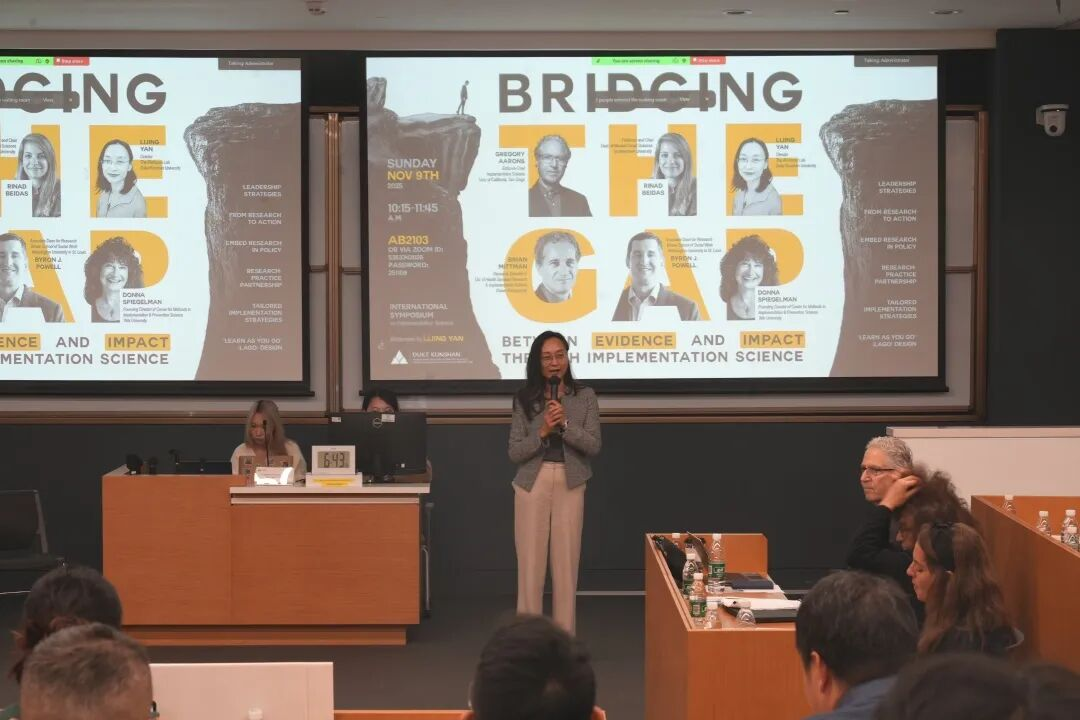
Professor Lijing Yan, Head of NCD Research at the Global Health Research Center of Duke Kunshan University, distilled the core concepts and theories of implementation science into a concise “four graphs in four minutes” presentation.
She emphasized that the discipline’s fundamental purpose is to bridge the gap between “evidence” and “impact” – acting as a vital conduit connecting research to real – world application. Regardless of approach, she noted, its ultimate goal remains to ensure that effective interventions are successfully adopted, sustained, and deliver maximum social, economic, and health benefits.
The five internationally renowned experts shared insights on the discipline from research and methodologies to real-world applications from different perspectives.
Gregory Aarons, Editor-in-Chief, Implementation Science; Professor, Psychiatry, University of California, San Diego

· An organization’s success in implementing Evidenve-Based Practice (EBP) largely depends on its internal “implementation climate”. To improve this climate, it is necessary to enhance foresight, knowledge, supportiveness, ad perseverance of implementation leadership.
· Implementation science is shifting towards “sustainability science”, which requires designing institutionalized strategies from the outset to ensure that effective interventions are truly implemented and serve the population in the long term.
Rinad Beidas, Ralph Seal Paffenbarger Professor and Chair, Department of Medical Social Sciences, Northwestern University Feinberg School of Medicine

· Society invests far more in scientific discoveries than in implementation support, resulting in more than 85% of global implementation attempts either failing to launch as planned or being terminated before maturity.
· The six-step implementation pathway includes identifying problems, selecting interventions, understanding barriers, developing blueprints, evaluating effects, and achieving sustainability. Among these, “community engagement” should run through the entire process.
· Implementation science is a “team sport” that requires the joint participation of policymakers, implementers, researchers, and the public to truly drive the transformation from “knowledge” to “action”.
Brian Mittman, Senior Research Scientist, Division of Health Services Research & Implementation Science, Kaiser Permanente and University of California, Los Angeles
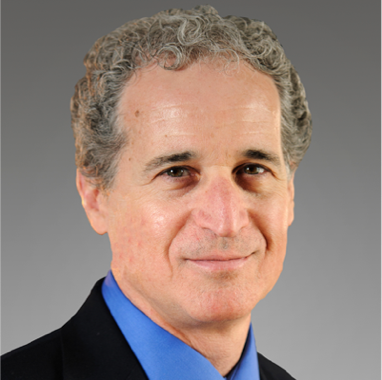
· Implementation science plays an important role in promoting national health transformation. It can collaborate with “third-party organizations” such as industry associations, patient advocacy groups, and professional societies. As “facilitators” of implementation, they can fill the “last mile” gap between innovative achievements and widespread implementation.
Byron J. Powell, Associate Dean for Research and Associate Professor, Brown School of Social Work, Associate Professor of Medicine, Associate Professor of Public Health, Washington University in St. Louis

· Tailored implementation refers to strategies specifically designed to meet the unique needs of individuals, teams, settings, or systems.
· Taking an intervention trial for people living with HIV in Vietnam as an example, tailored implementation strategies (with an 80% implementation success rate) show significant advantages over standardized approaches (with a 5% implementation success rate). Implementation science cooperation is not a superficial involvement; the local team’s approach of combining “top-down” and “bottom-up” strategies and actively engaging government participation at each step is worthy of learning.
Donna Spiegelman, Susan Dwight Bliss Professor of Biostatistics, Cardiovascular Medicine, and Public Health; Founding Director, Center for Methods in Implementation and Prevention Science (CMIPS); Yale University

· The “Learning by Doing (LAGO)” design provides systematic methodological support for simultaneously optimizing the effectiveness and cost-efficiency of implementation strategy packages. It can help industries systematically diagnose barriers to product application and develop cost-effective promotion strategies.
During the plenary discussion, experts had a substantive exchange on policy dissemination, international collaboration, and technology implementation. Attendees also raised questions about policy drift within the Chinese context, building long-term trust to deepen global cooperation in implementation science, and overcoming technical and resource barriers in applying its methodologies. Following the symposium, invited experts and industry representatives joined a closed-door luncheon centered on the theme “Empowering the Medical Industry Development through Implementation Science”
The international symposium successfully aligned leading global theory with on-the-ground practical needs in China. Furthermore, it created a vital platform for interdisciplinary, cross-sector, and international collaboration — injecting lasting momentum into efforts to enhance the quality of social services and foster ongoing innovation.

Written by Ruoning Feng
