

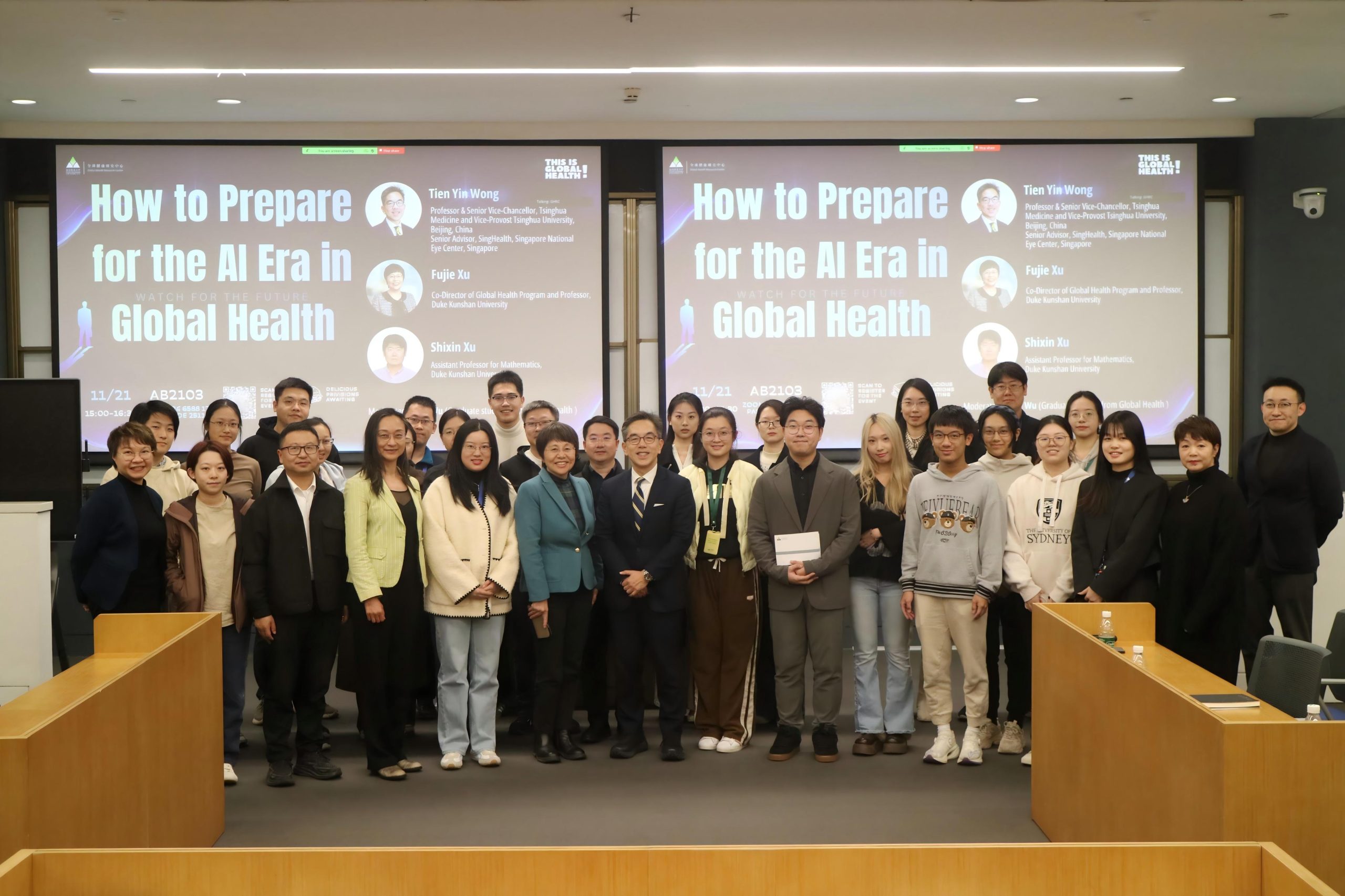
On November 21, the fourth autumn semester session of the ”This is Global Health!” Symposium Series, hosted by the Global Health Research Center at Duke Kunshan University, concluded successfully.
Focusing on the theme “How to Prepare for the AI Era in Global Health?”, the event featured Professor Tien Yin Wong—Professor & Senior Vice-Chancellor of Tsinghua Medicine and Vice-Provost of Tsinghua University, and an internationally renowned expert in ophthalmology. He led an in-depth discussion on the integration of artificial intelligence (AI) technology and global health for DKU faculty and students, a delegation from Kunshan’s health system, and industry partners.
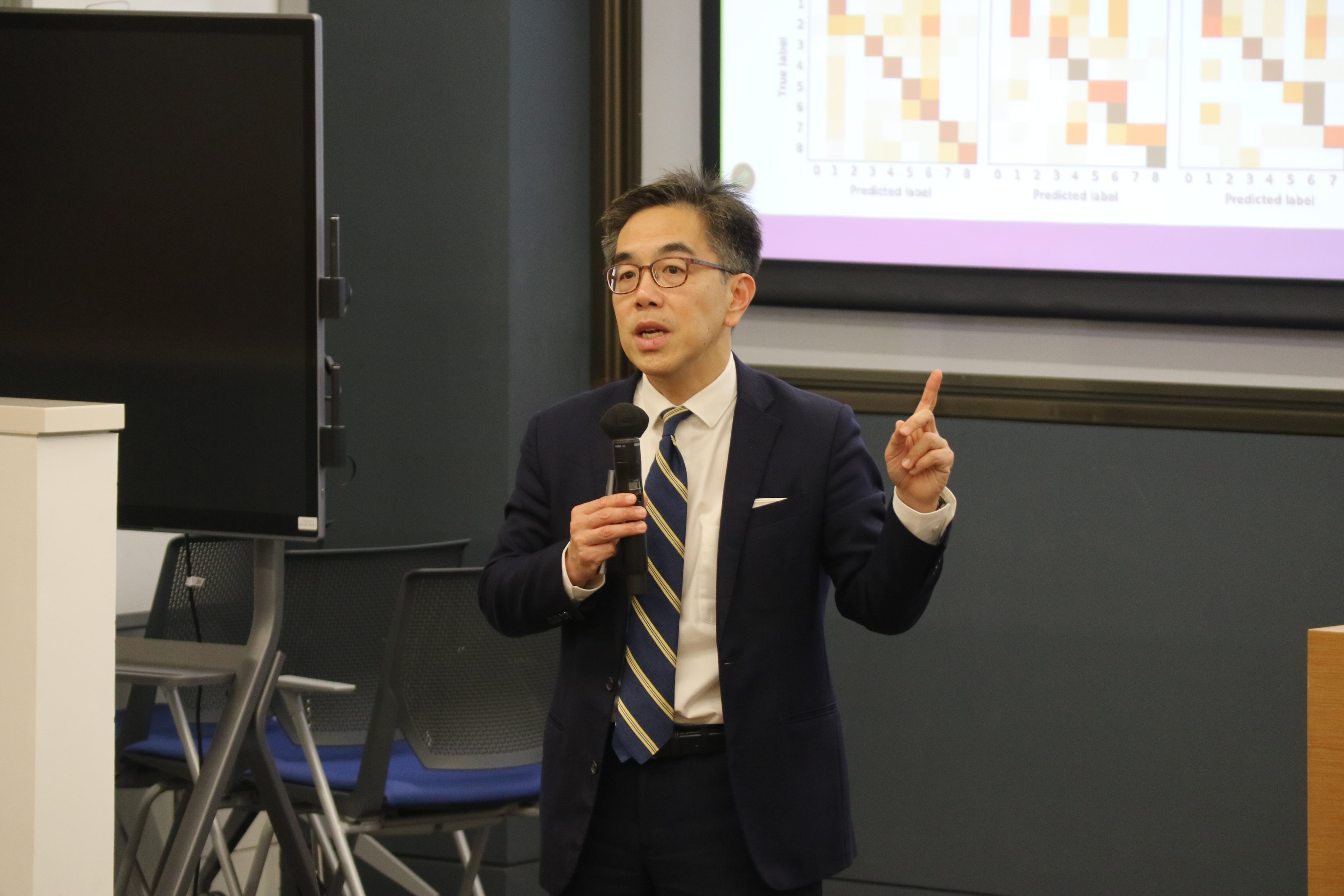
In his keynote speech, Professor Wong drew upon his extensive interdisciplinary experience, analyzed the core challenges in global health, the practical barriers to AI implementation, and pathways for building an AI-empowered global health ecosystem.
He highlighted that the global health sector is undergoing profound changes and facing multiple challenges: the disease spectrum continues to evolve, with aging populations and the rising prevalence of chronic diseases becoming dominant trends; access to quality medical services remains highly uneven across regions, with primary care in low- and middle-income countries being particularly weak; healthcare costs are rising year by year, while shortages persist in both the number of medical professionals and their expertise.
Although breakthroughs and broader application of AI technology are seen as potential solutions to these trends and challenges, real-world implementation has fallen short. For instance, a lack of understanding of local healthcare ecosystems in different regions leads to poor adaptability of technology; lack of validation in clinical settings raises doubts about model generalizability; unified standards for AI development and evaluation are lacking, with assessments often focusing narrowly on test accuracy while overlooking actual diagnostic needs; trust and engagement from both doctors and patients in AI are insufficient. Low- and middle-income countries, in particular, face shortage of data and studies, and technological applications often struggle to incorporate patient-centered humanistic care.
Professor Wong shared the practical experience of Singapore’s “Selena Plus” project—the world’s first national AI-driven screening program for diabetic retinopathy. This project overcame the limitations of traditional screening which relied heavily on specialists, translating AI innovation from research into tangible public health impact, safeguarding the vision of tens of thousands. Building on this and other project expereinces, he proposed the “Six-P” framework to guide the development of an AI-powered global health ecosystem:
- People: Cultivate interdisciplinary talent pipelines, transform medical education, and train AI-ready physicians.
- Product: Develop interpretable and trustworthy AI tools, shifting from “Disease-centered” models to “Universal Health”.
- Platform: Establish secure data-sharing platforms, balancing privacy protection and data utilization through approaches like synthetic data generation and differential privacy.
- Policy: Develop unified guidelines for medical AI model development and evaluation.
- Process: Streamline workflows for integrating AI into healthcare systems and accumulate real-world application experience.
- Partnership: Promote public-private partnerships and international collaboration to address data bias and advance global health equity.
Against this backdrop of technological transformation, Professor Wong also shared Tsinghua Medicine’s strategies: building an integrated academic medical system, promoting the translation of medical technologies, aiming to cultivate clinical and research talents equipped with interdisciplinary backgrounds and prepared for future technological advances.
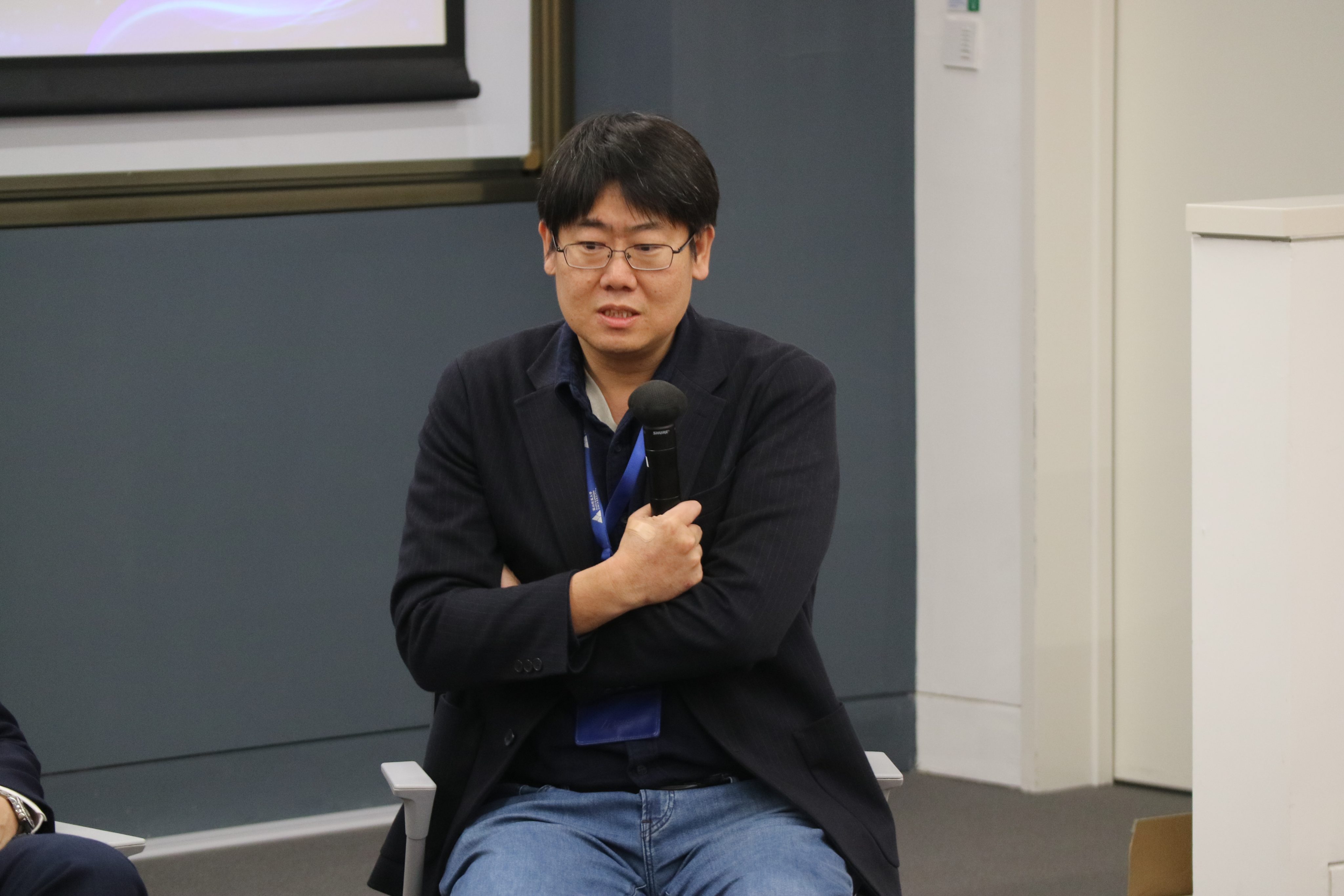
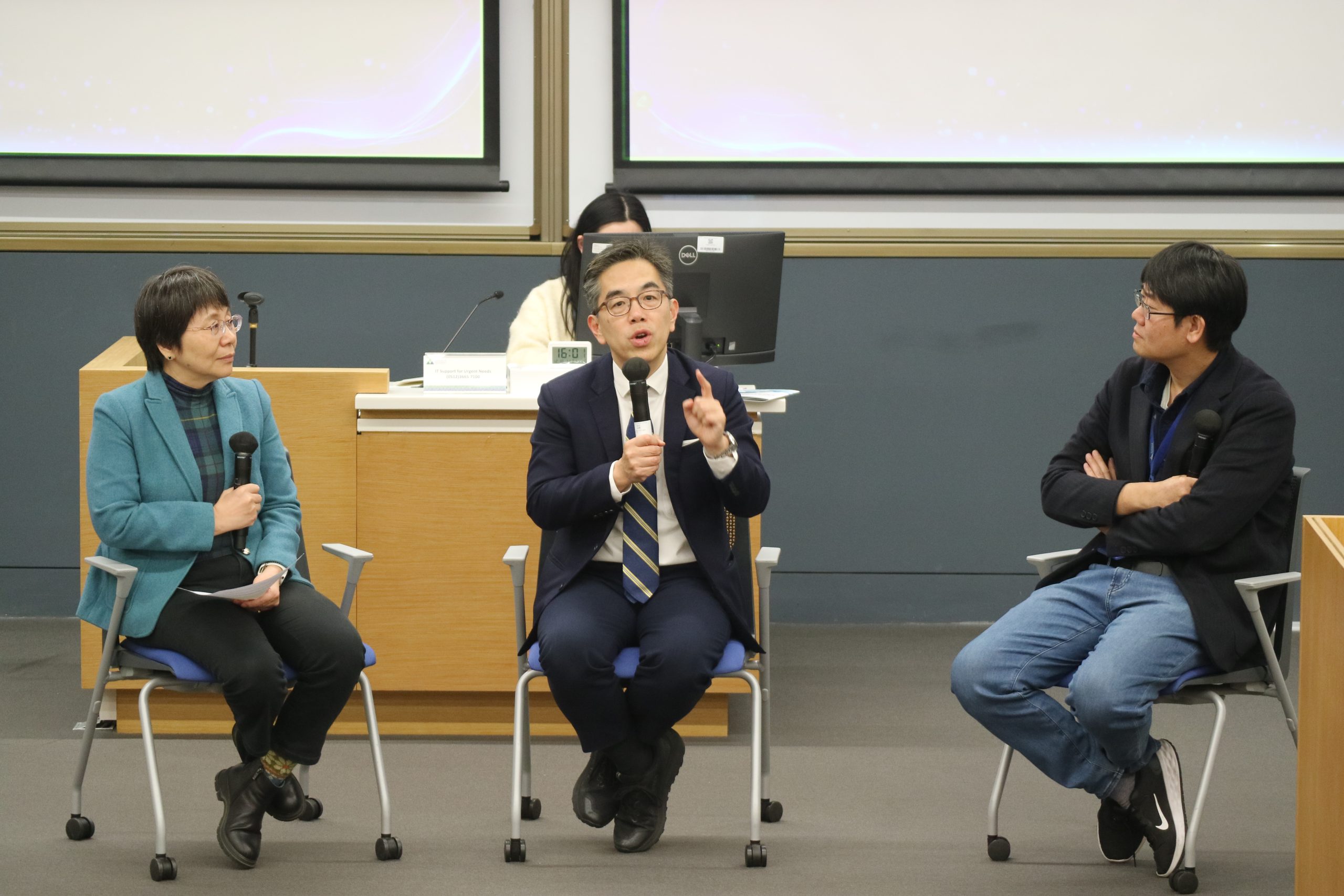
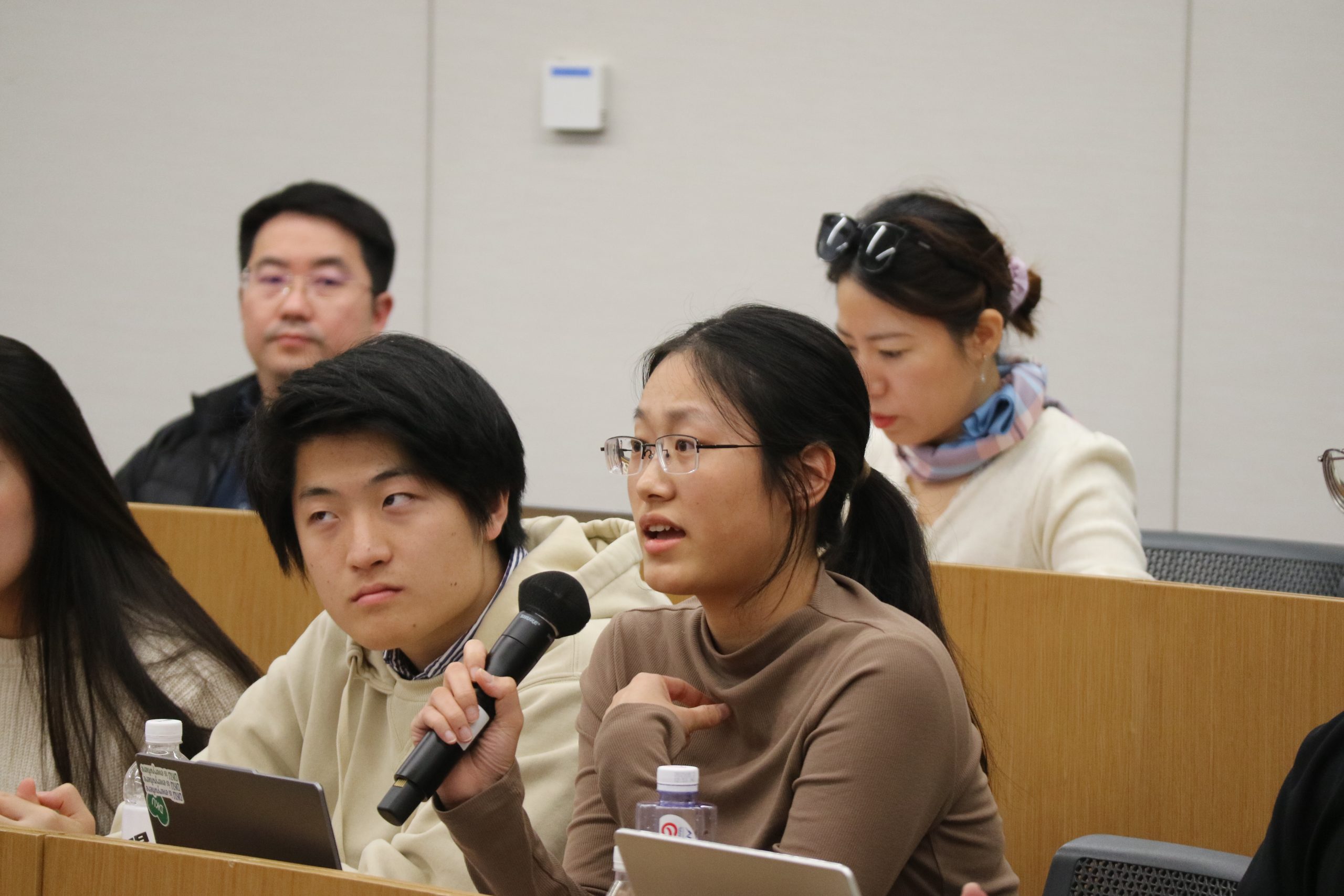
During the panel discussion, Professor Tien Yin Wong and Dr. Shixin Xu, Assistant Professor of Mathematics at Duke Kunshan University, addressed and discussed questions raised by faculty and students. Regarding the question of “how physicians can balance the use of AI tools and retaining core clinical skills”, Professor Wong took gastroscopy biopsy as an example, emphasizing that AI can only indicate suspicious lesion areas-final diagnosis still requires a doctor’s clinical judgment. He stressed that medical education should incorporate courses on AI ethics and skill maintenance to avoid the degradation of core diagnostic and treatment capabilities.
To address the question of “whether involving doctors in mathematics and AI model training would facilitate AI’s integration into healthcare”, Prof. Shixin Xu pointed out that purely data-driven AI faces data acquisition challenges. This could be mitigated by using mathematical modeling to generate synthetic data combined with real-world calibration. He also suggested that doctors focus on standardizing data collection from the source rather than learning complex mathematics.
The symposium provided a clear vision of global health’s future in the AI era, offering both forward-looking insights and practical references for students, faculty, and healthcare practitioners.
Written by Ruoning Feng
