


On October 28, 2025, Duke Kunshan University’s Global Health Research Center (GHRC) successfully concluded the 203rd installment of its “This is Global Health! ” symposium series. Titled “The Future of World Population and Global Health: Diverging Trends, Competitive Narratives, and the Role of the United Nations,” the event also marked the 80th anniversary of the founding of the UN.
Two world-leading demographic experts, John Wilmoth and Leiwen Jiang, shared cutting-edge insights and engaged in thought-provoking discussions with both in-person and online audiences, exploring critical trends and narratives shaping the future of population and health on a global scale.
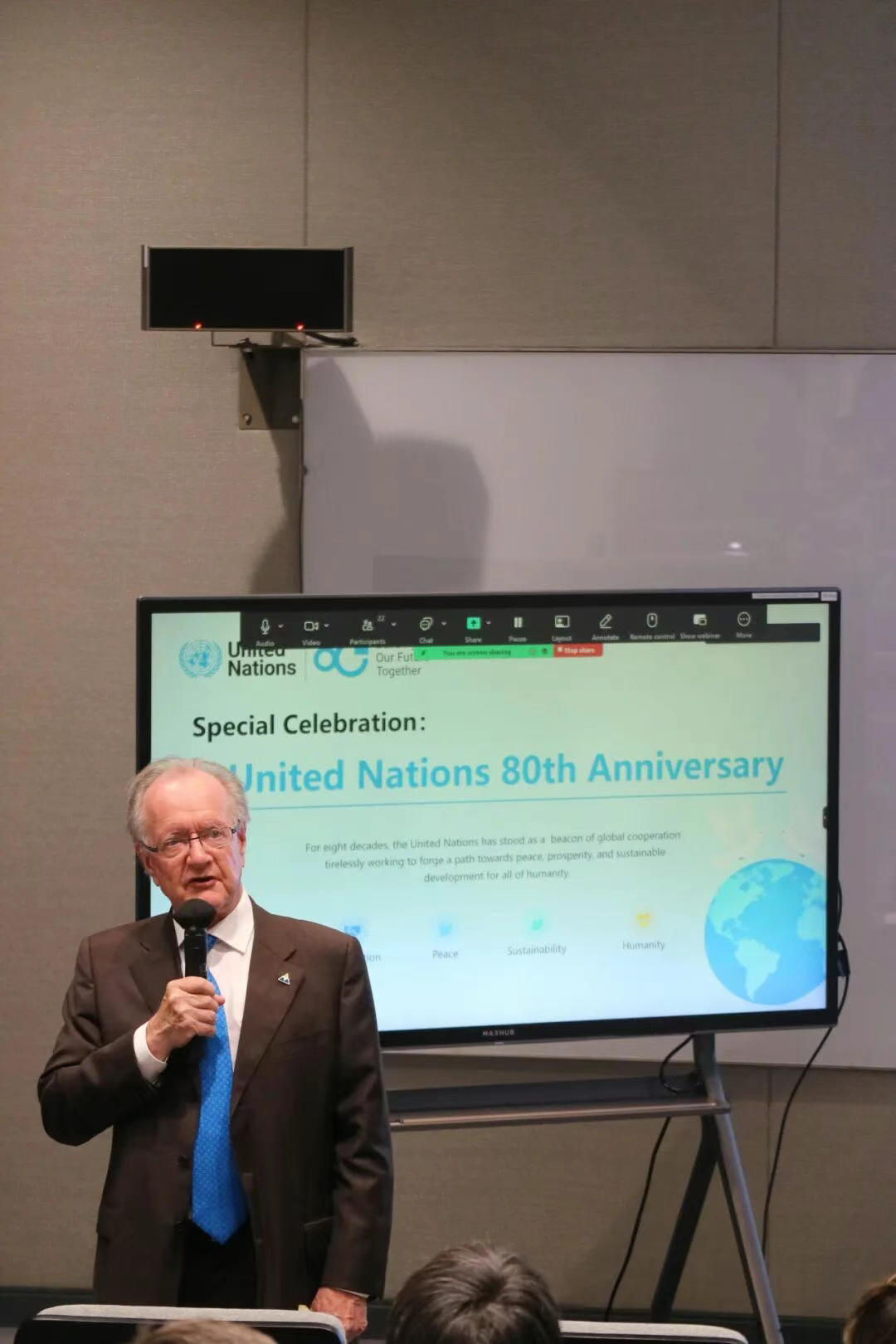
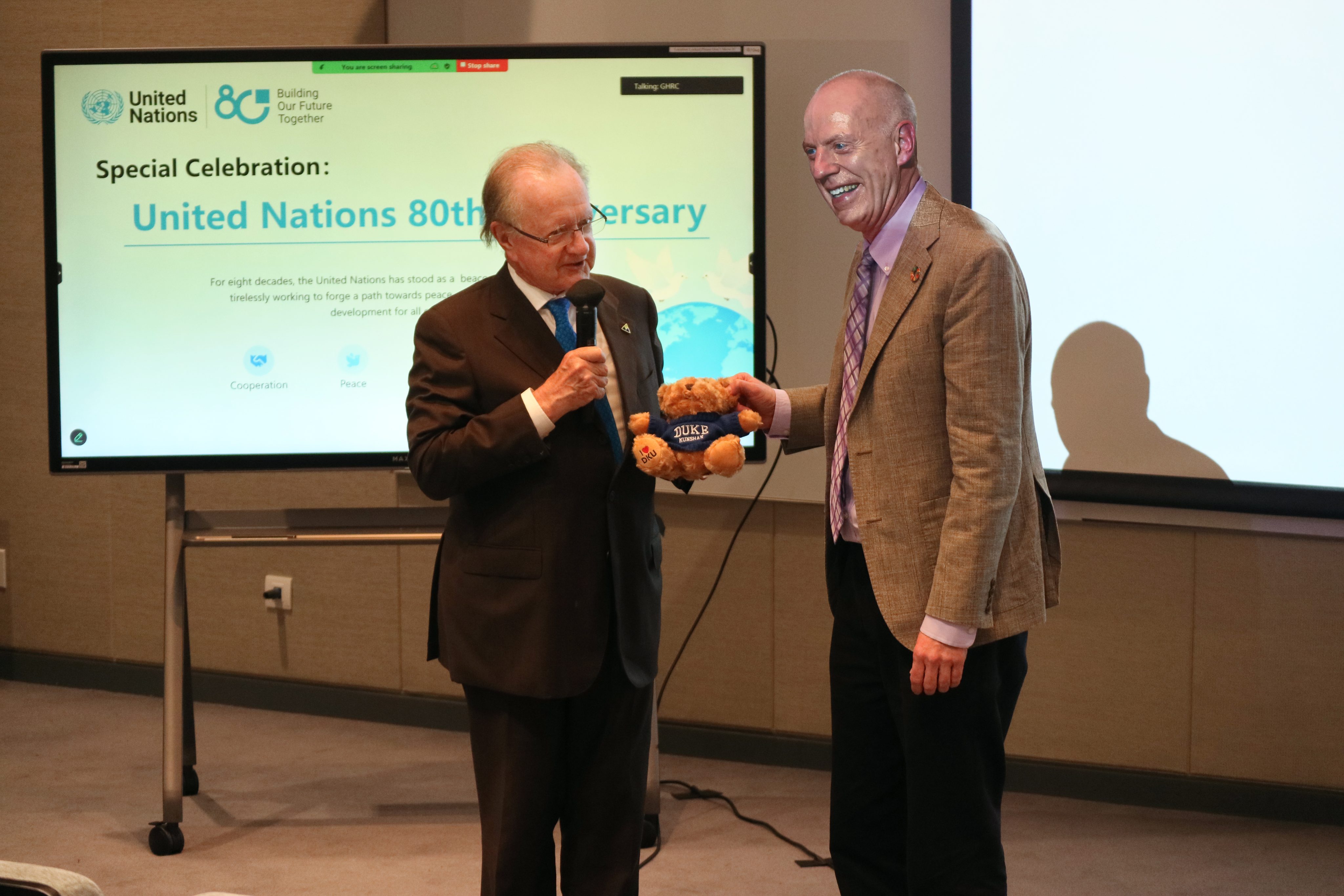
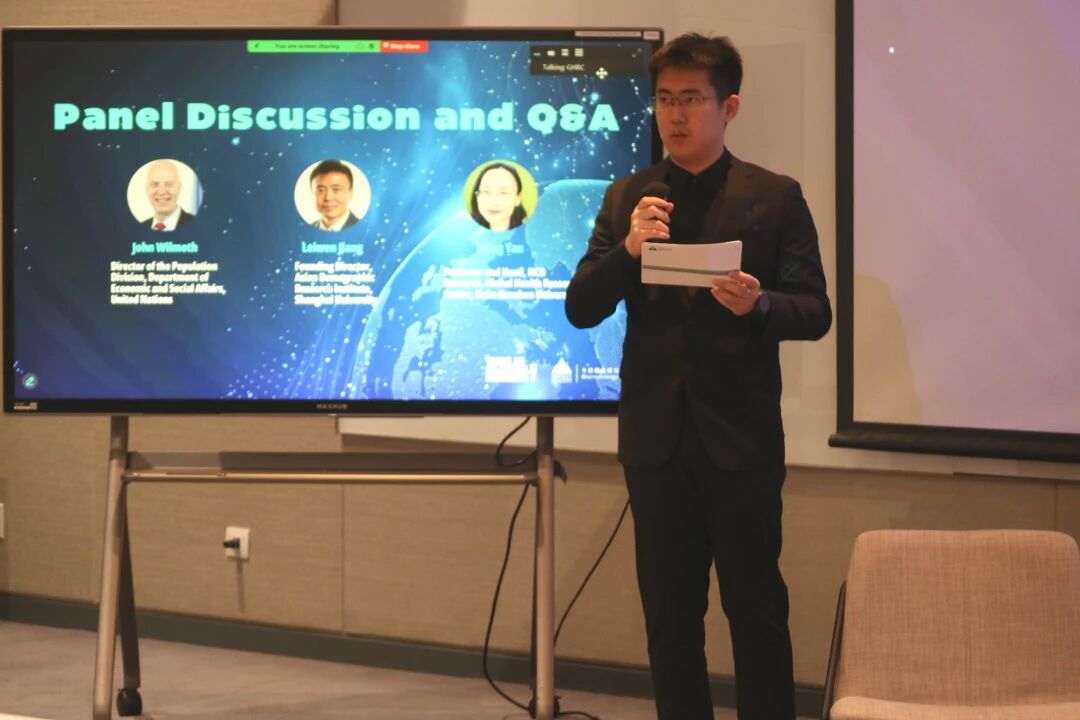
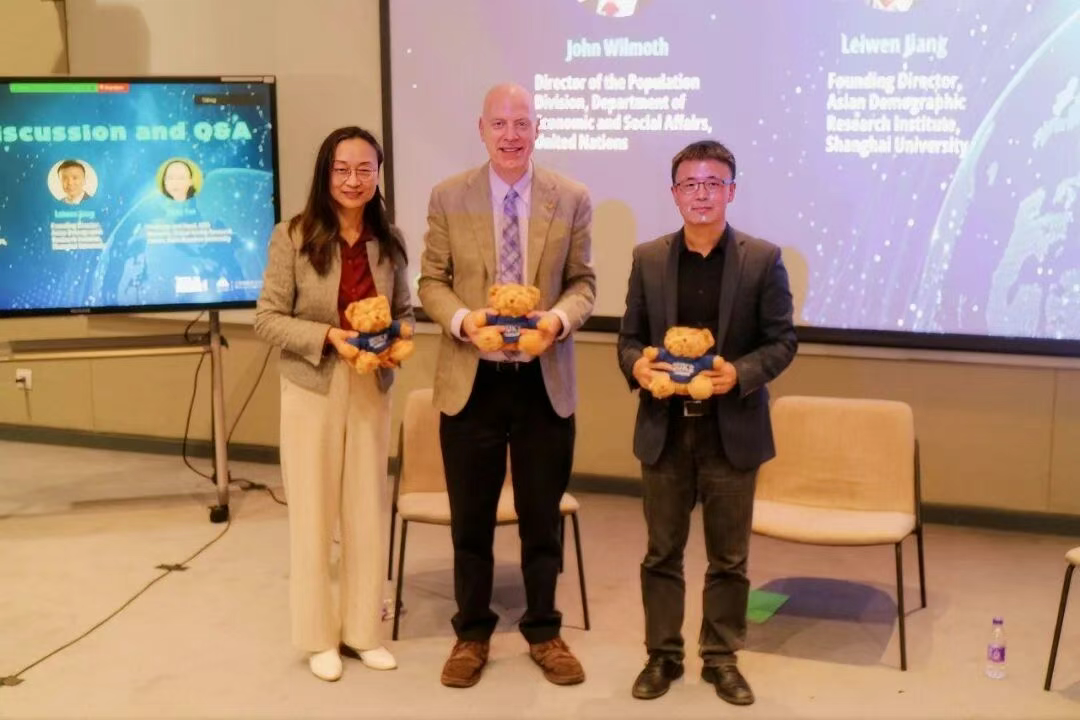
The event was moderated by Bo Chen, a Master of Science in Global Health candidate (Class of 2027). Opening remark for the special UN 80th anniversary session was delivered by John Quelch, Executive Vice Chancellor and American President of Duke Kunshan University. He highlighted the crucial role of international collaboration in addressing global population and health challenges. As a welcoming gesture during the session, Professor Quelch also presented Professor John Wilmoth with a commemorative Duke Kunshan University teddy bear.
As the keynote speaker, Professor John Wilmoth, Director of the UN Department of Economic and Social Affairs’ Population Division, offered a systematic analysis of global population and health, structured around five key dimensions.
He began by reviewing the historical evolution of the United Nations’ work in population, tracing the establishment of its Population Commission and Population Division in 1946 and the progression of three pivotal international conferences.
Among these, he highlighted the 1994 International Conference on Population and Development (ICPD) in Cairo as a defining milestone. This conference marked a crucial shift in global population governance by comprehensively linking demographic issues with environmental sustainability, sexual and reproductive health, and women’s empowerment.
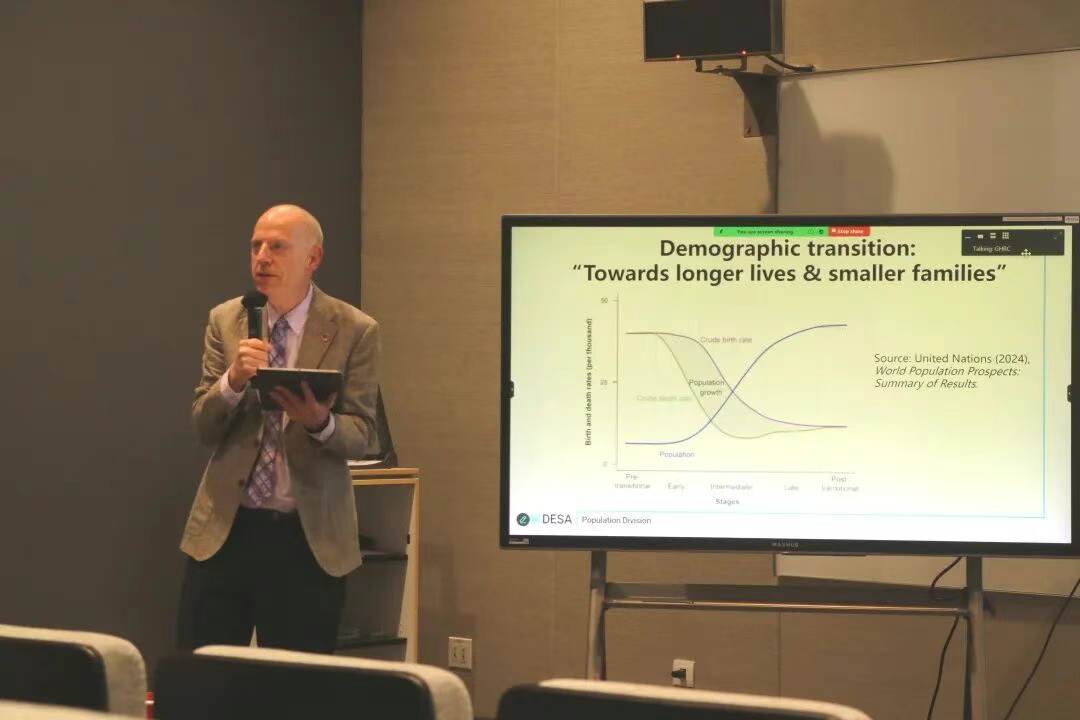
In his analysis of global population trends, Professor John Wilmoth observed that the world is moving “toward longer lives and smaller families.”
While global life expectancy at birth continues to rise, persistent gaps remain between countries of different income levels. These disparities are reflected in the distribution of causes of death—from chronic and communicable diseases to maternal and child health and injuries—which vary significantly depending on national income. Such variation not only underscores how economic development shapes population health but also informs the need for differentiated policy approaches in health and demography.
Global population continues to grow, though at a decelerating pace. Having reached 8 billion in 2022, it is projected to rise to 9 billion by 2037 and exceed 10 billion by 2058. At the same time, the age structure of populations worldwide is gradually shifting toward an older demographic.
He also talked about the evolving global discourse on population: where fears of a “population explosion” once prevailed, attention has now turned to trends of “aging and demographic decline,” with the profound socioeconomic impacts of low fertility rates emerging as a new priority.
Additionally, he examined the diverse approaches and debates surrounding fertility regulation policies across different countries, reaffirmed reproductive rights as a fundamental human right, and underscored the continued relevance of the International Conference on Population and Development Programme of Action (ICPD PoA) in guiding progress toward sustainable demographic and developmental goals.
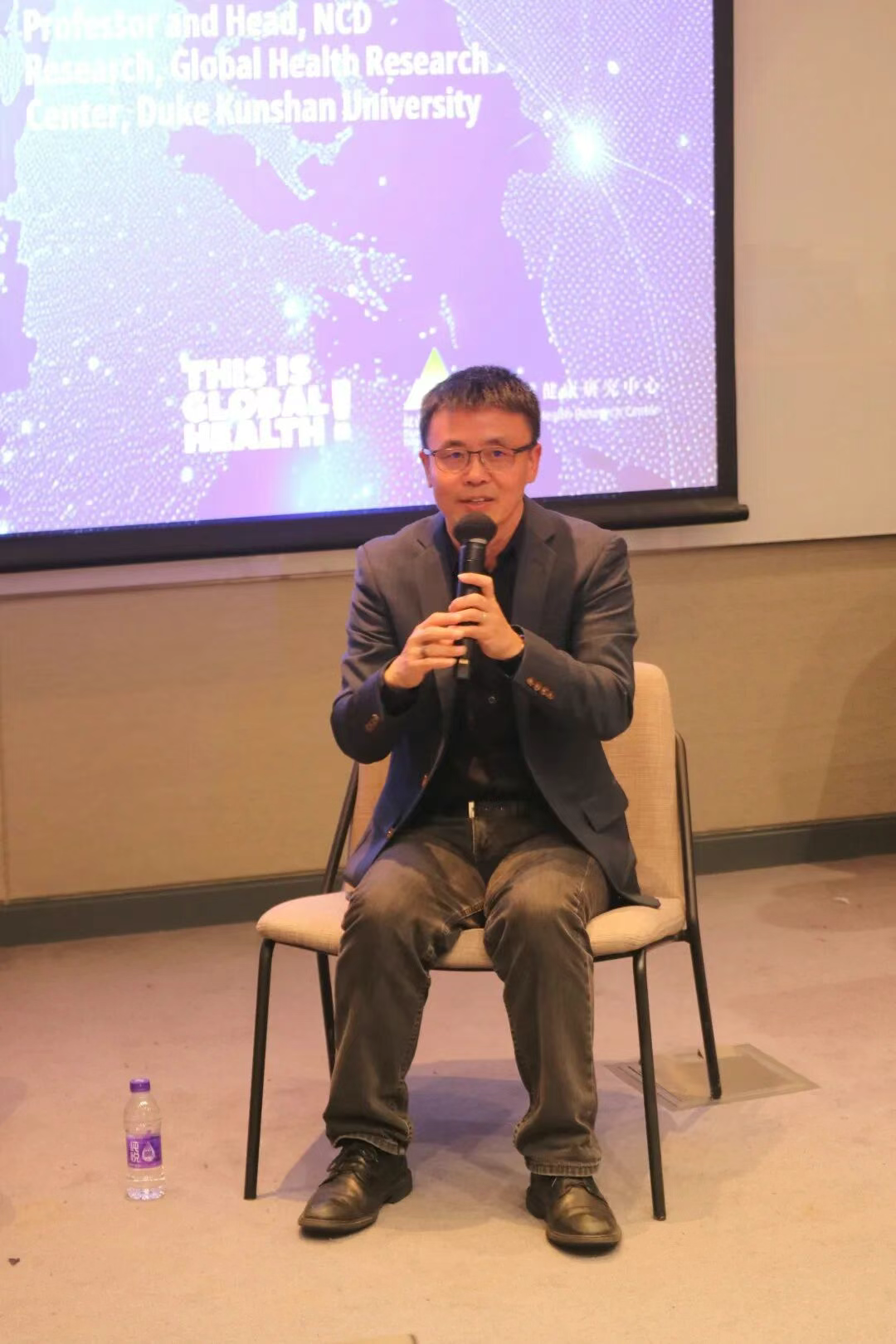
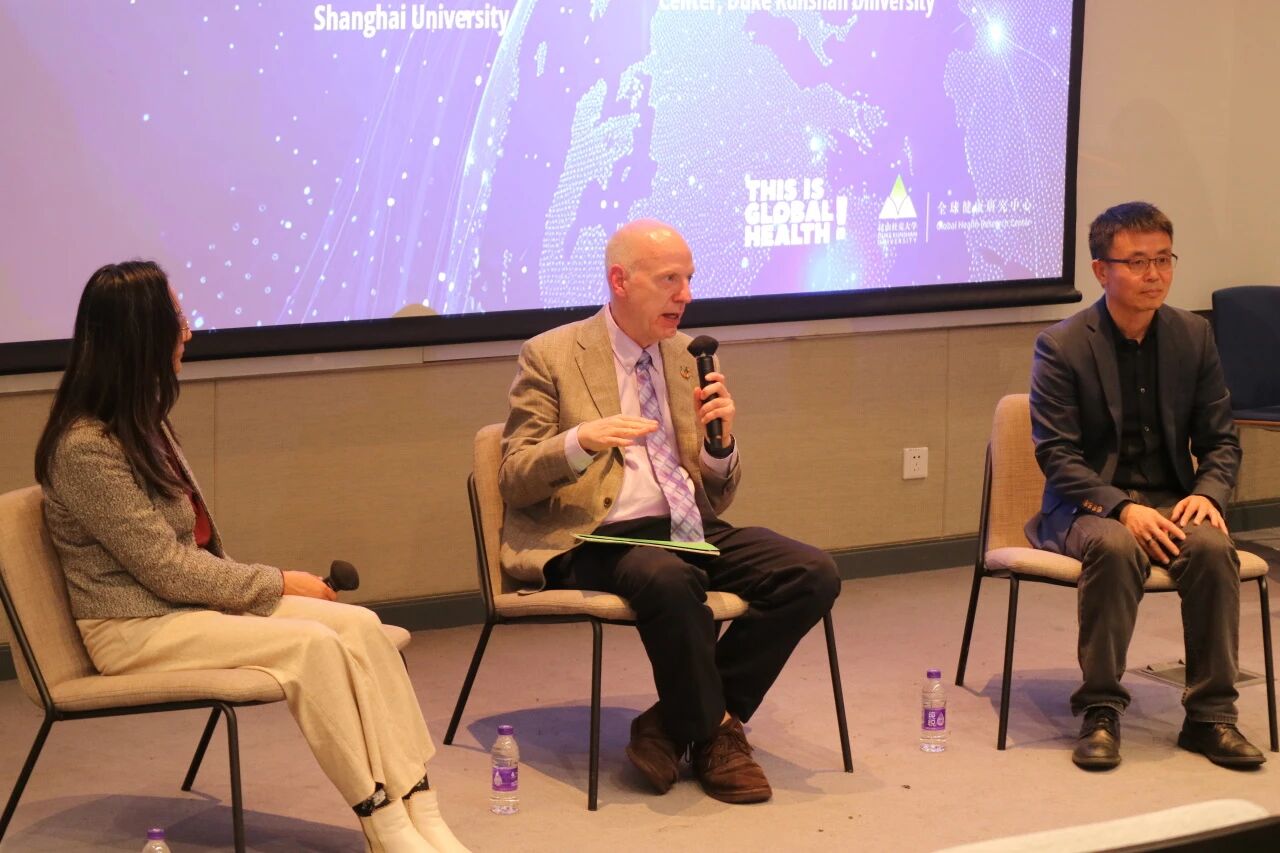
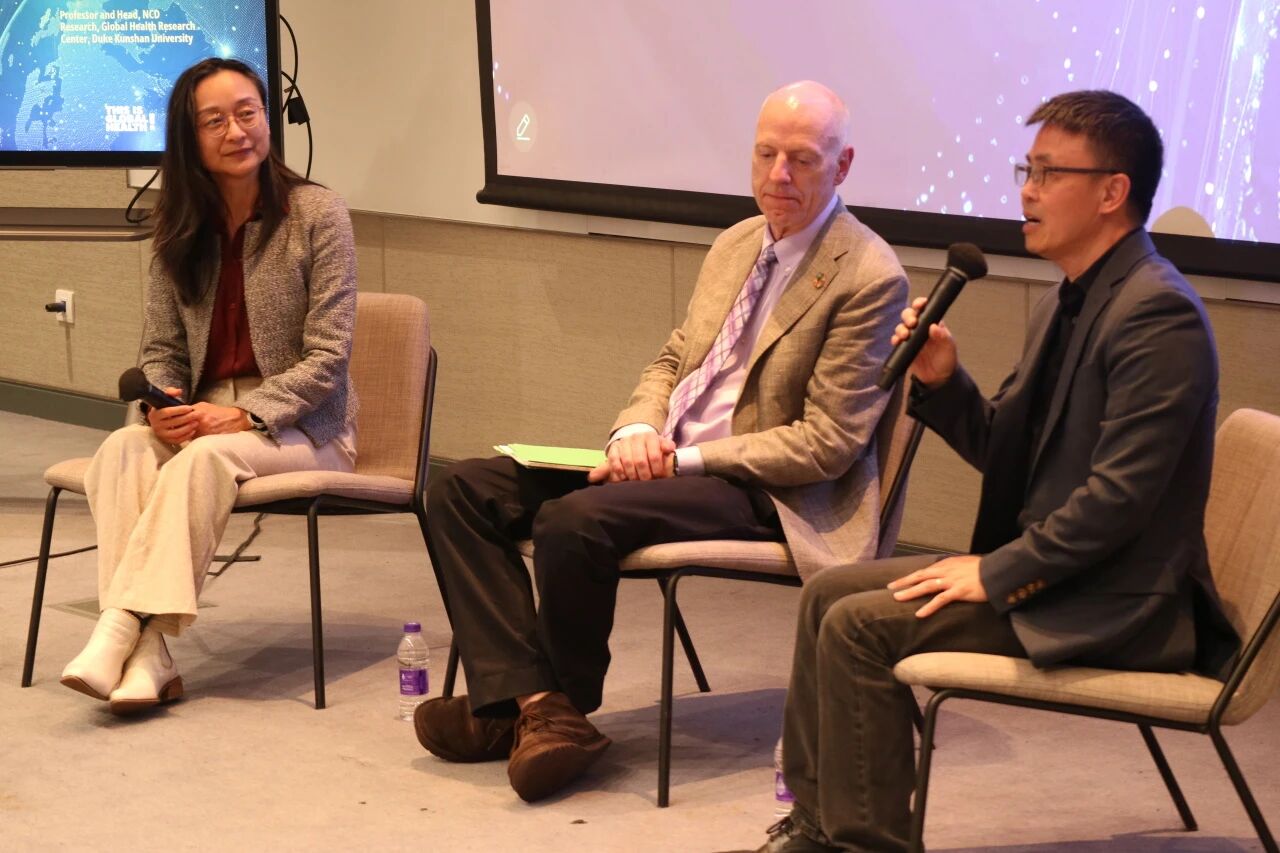
Following the keynote address, a panel discussion was facilitated by Professor Lijing Yan, Professor and Head of NCD Research at DKU’s Global Health Research Center, featuring Professors Leiwen Jiang, the Founding Director of the Asian Demographic Research Institute at Shanghai University, and John Wilmoth.
The discussion provided a substantive dialogue on pressing challenges in international population governance and global health implementation, followed by an interactive audiences’ Q&A.
During the panel, Professor Leiwen Jiang outlined the core mission and key research accomplishments of the Asian Demographic Research Institute at Shanghai University. As a leading regional platform dedicated to the study of population aging and sustainable development, the institute has, over the past decade, utilized advanced global policy-quantification methodologies.
This approach has enabled pioneering work on critical issues including Asia’s response to an aging population, human capital development, the effects of environmental change, and international migration patterns. Its research continues to offer vital academic support for shaping population and global health policies across the region.
Addressing a prominent audience question — “How will artificial intelligence impact the formulation of government population policies?” — Professor John Wilmoth noted that as productivity continues to advance, even with a shrinking workforce, governments could effectively respond to an aging society by extending retirement ages and encouraging greater female labor force participation—thereby expanding the overall labor pool.
Professor Leiwen Jiang added that current population policy formulation often suffers from a degree of lag. In the face of a complex and rapidly evolving social environment, he urged governments to actively leverage AI technology to improve the speed and precision of policy responses, enabling them to better adapt to the challenges of dynamic demographic shifts.


The lecture offered a rich exploration of topics ranging from the historical evolution of UN population governance to contemporary global demographic dynamics — encompassing fertility policy from a human rights perspective and pathways toward sustainable development.
This diverse content fostered an effective platform for knowledge exchange among faculty, students, and professionals in the field. In doing so, it helped to build shared understanding and contributed valuable insight to the global effort of addressing common challenges in population and global health.
Written by Ruoning Feng
