

On March 5, Dr. Joseph D. Tucker and Dr. Weiming Tang of the University of North Carolina at Chapel Hill were invited to speak at a participatory design workshop hosted by the Duke Kunshan University Global Health Research Center. Focusing on “Trust, Implementation, and Co-creation: Co-designing Diagnostic Technologies with Communities,” the workshop brought together policymakers, community health practitioners, and researchers to explore how participatory approaches can help align diagnostic innovations with real-world community needs.
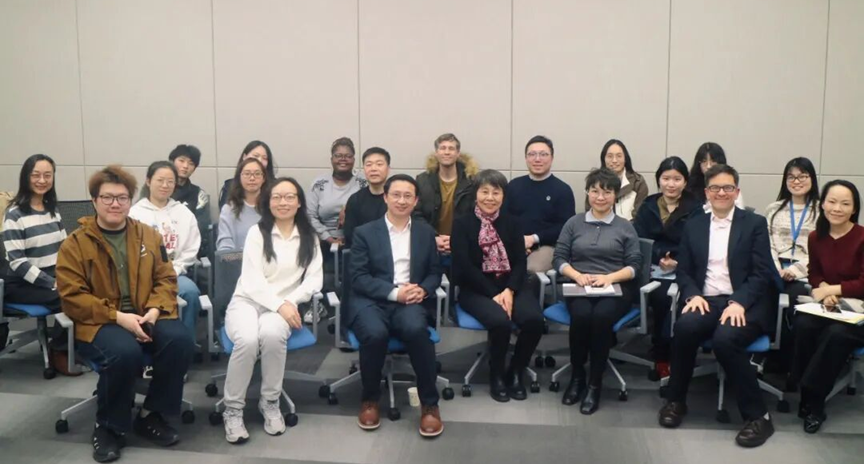
Group photo from the workshop at Duke Kunshan University
In his opening remarks, Dr. Weiming Tang provided a systematic analysis of the key challenges in implementing diagnostic technologies at the community level. He noted that beyond issues of access, a lack of community trust often represents a more fundamental barrier. Concerns around privacy, as well as misalignment between services and local cultural contexts and needs, can significantly limit engagement with testing. To address these challenges, he proposed an interactive and participatory framework that integrates capacity building with trust development. He emphasized that these two dimensions are closely interconnected and should be advanced in parallel. Rather than relying on top-down delivery, he underscored the importance of sustained collaboration with communities to co-develop diagnostic services that are both relevant and trusted.
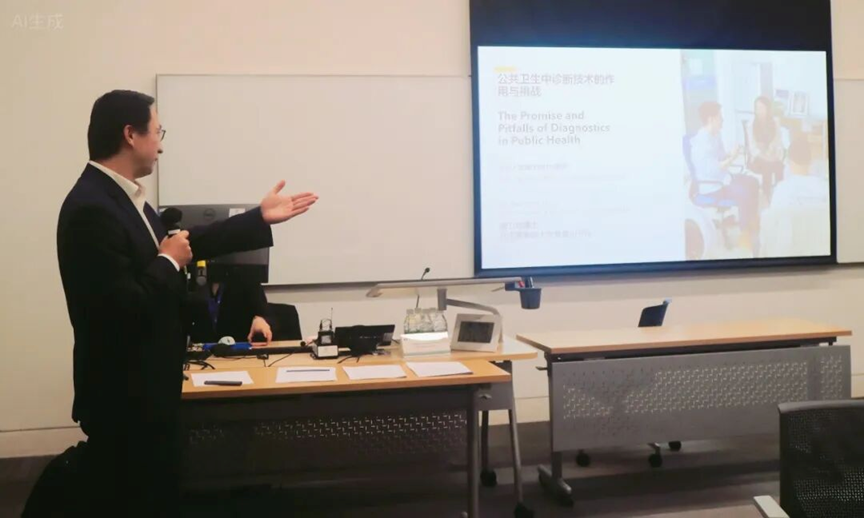
Dr. Weiming Tang presenting during the workshop
Dr. Joseph D. Tucker combined methodological insights with practical examples in his presentation, outlining a range of participatory pathways for advancing diagnostic innovation. Drawing on real-world examples, he described how approaches such as designathons and crowdsourcing community priorities have been used to engage diverse populations—including men who have sex with men and university students—in improving HIV self-testing and campus-based screening programs. He emphasized that effective community-based interventions are grounded in a deep understanding of the social and cultural contexts of specific populations. In this process, researchers should act as collaborators rather than directors. He also shared tools and resources developed through his team’s global work, offering participants a practical “co-creation toolkit” to support the design and implementation of community-engaged diagnostic services.
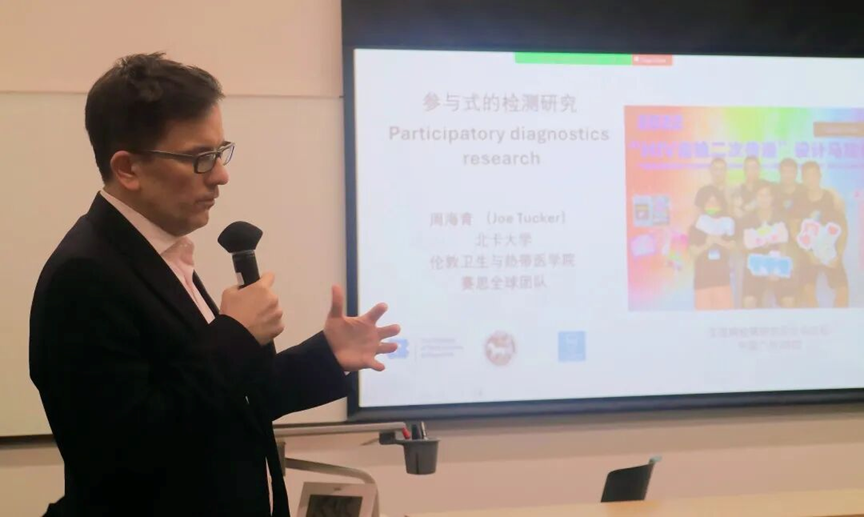
Dr. Joseph D. Tucker presenting during the workshop
A key highlight of the workshop was the close integration of academic and practical perspectives. During the group co-creation sessions, participants collaboratively designed community-based, participatory testing strategies for specific populations, including children, older adults, and workplace employees.
Mr. Tian Wang from the Disease Prevention and Control Division of the Kunshan Municipal Health Commission shared his firsthand experience leading cervical cancer screening programs for female factory workers, highlighting real-world challenges related to accessibility, cost, and stigma. Senior coordinators and postdoctoral researchers from the Global Health Research Center also contributed strategic insights from their respective perspectives. The diversity of these contributions ensured that the resulting proposals were both innovative and locally relevant.
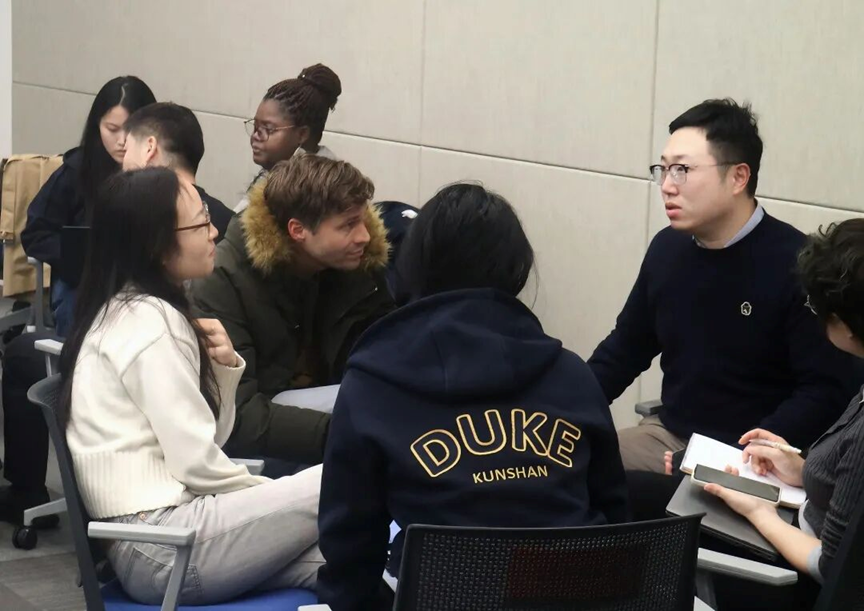
Workshop participants collaborating in a group co-creation session
In the final presentations and open discussions, each group showcased service blueprints designed for specific community contexts. Discussions focused on translating the principles of participatory design into sustainable, real-world practice—for example, by establishing key community touchpoints to build trust, collaborating with businesses to reduce testing costs, and leveraging digital tools to improve accessibility. Both Dr. Joseph D. Tucker and Dr. Weiming Tang, together with the practitioners, emphasized that there is no one-size-fits-all solution. Sustained engagement, respect for local knowledge, and adaptive collaboration are critical to ensuring the successful integration and long-term impact of diagnostic technologies within communities.
As global health increasingly prioritizes people-centered approaches and health equity, the workshop not only offered an innovative methodological framework but also demonstrated, through meaningful cross-sector dialogue and collaborative design, how cutting-edge research can be translated into inclusive practice. It reaffirmed that meaningful impact is achieved only when technologies are designed with communities rather than for them, ensuring that innovation truly benefits every individual.
