

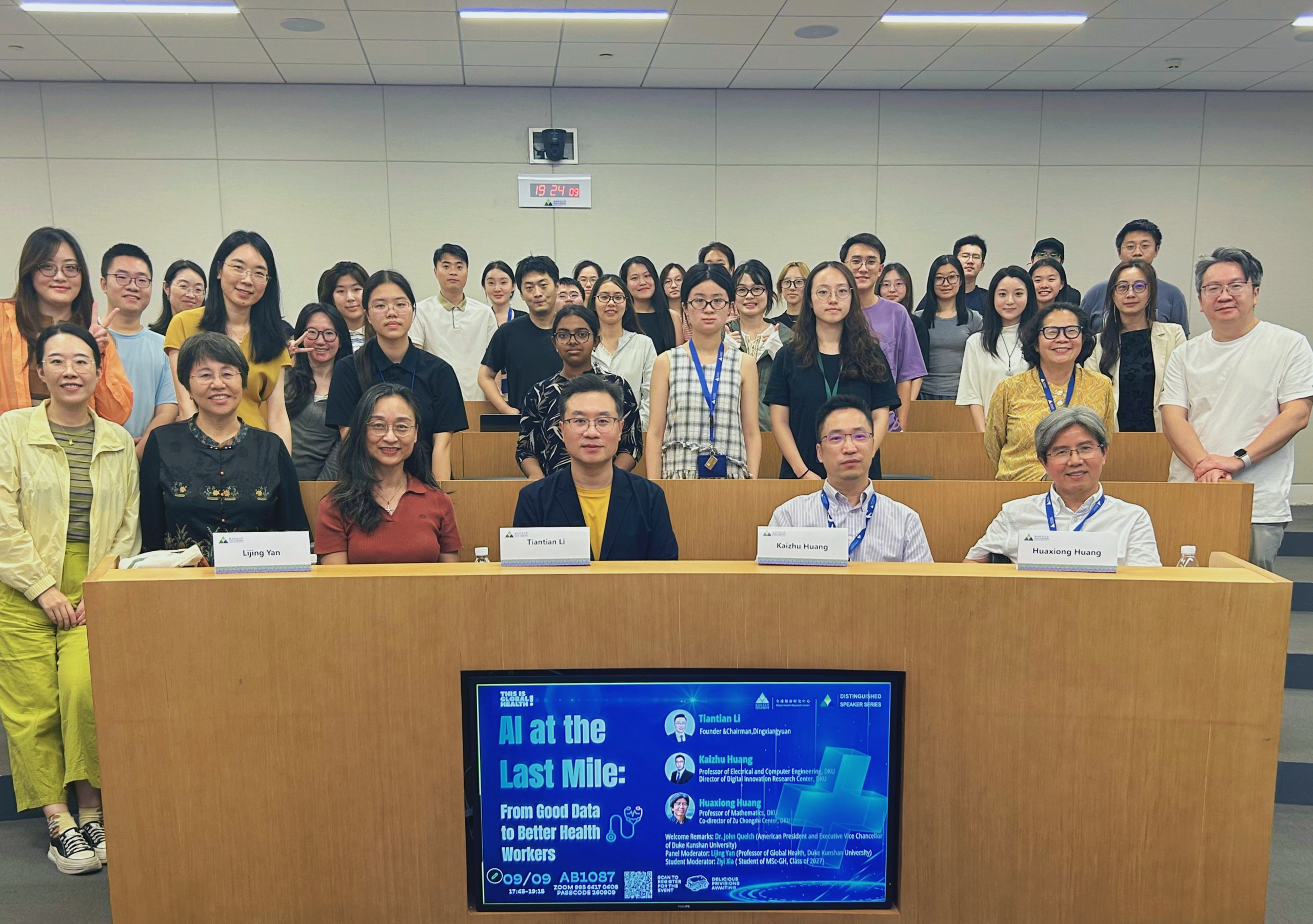
On the evening of September 9, 2026, a joint event of the “This is Global Health!” Symposium Series and the DKU Distinguished Speaker Series took place at the Academic Building. Tiantian Li, Founder and Chairman of DXY, delivered a keynote address on the practical application of artificial intelligence in healthcare. He discussed how high-quality data, rigorous methodologies, and responsible governance can help AI move beyond technical promise to support clinicians and improve care delivery. The event also featured a panel discussion and audience Q&A, bringing Li into conversation with Kaizhu Huang, Professor of Electrical and Computer Engineering and Director of the Digital Innovation Research Center at DKU, and Huaxiong Huang, Professor of Mathematics and Co-director of the Zu Chongzhi Center. Along with faculty and students, they explored the current practice and future possibilities of AI in healthcare.
Technology for Good: Empowering the Front Line
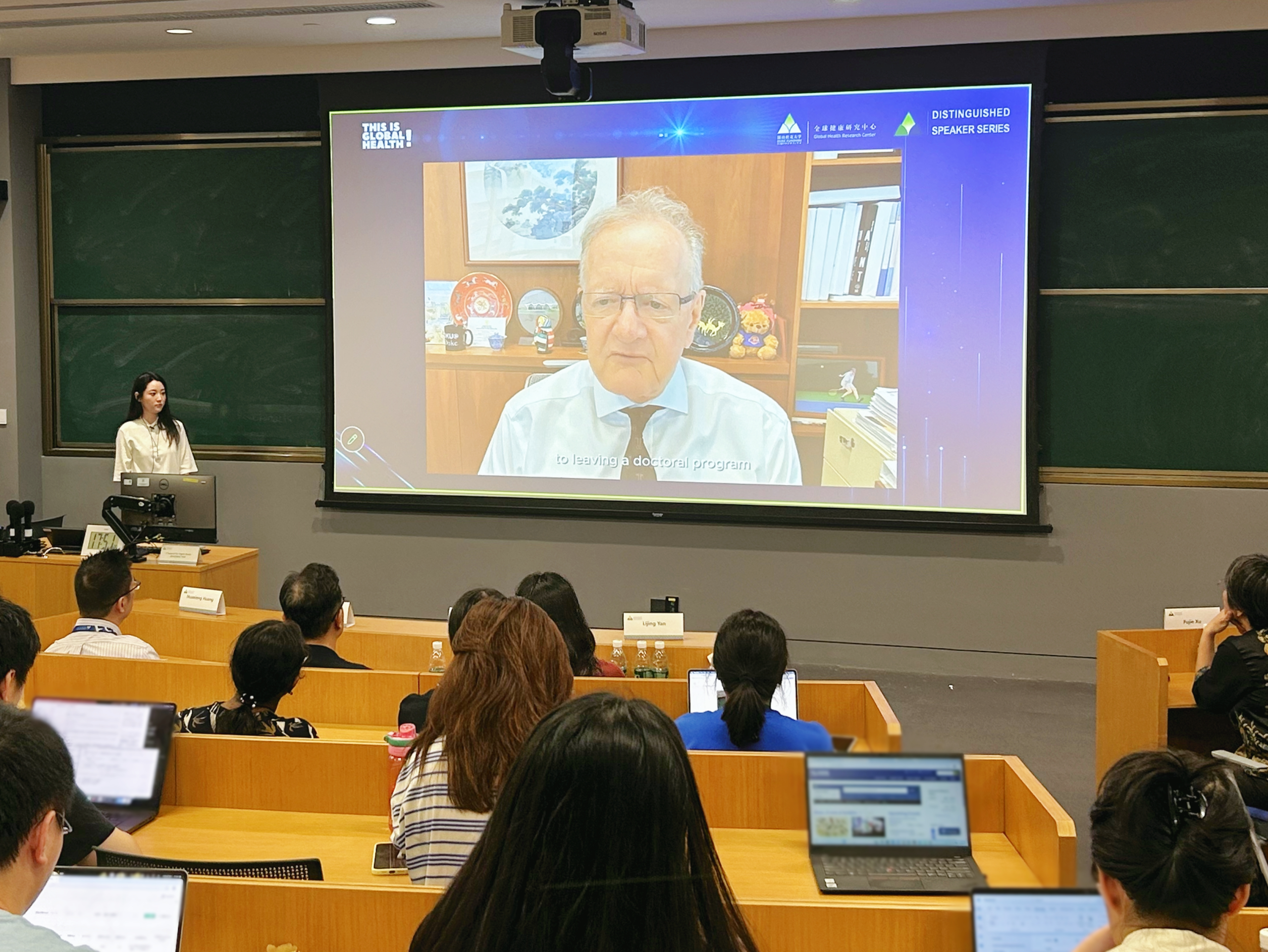
Prof. John Quelch, DKU’s Executive Vice Chancellor and American Chancellor, opened the event with welcome remarks. Introducing the two platforms behind the session — the “This is Global Health!” Symposium Series and the DKU Distinguished Speaker Series — he addressed the theme “AI at the Last Mile: From Good Data to Better Health Workers.” Prof. Quelch noted that AI’s value lies not only in its potential to transform health systems, but also in whether it can turn high-quality data into meaningful support for frontline health workers and, ultimately, strengthen care at the community level.
Building Healthcare AI on Data, Methods, and Governance
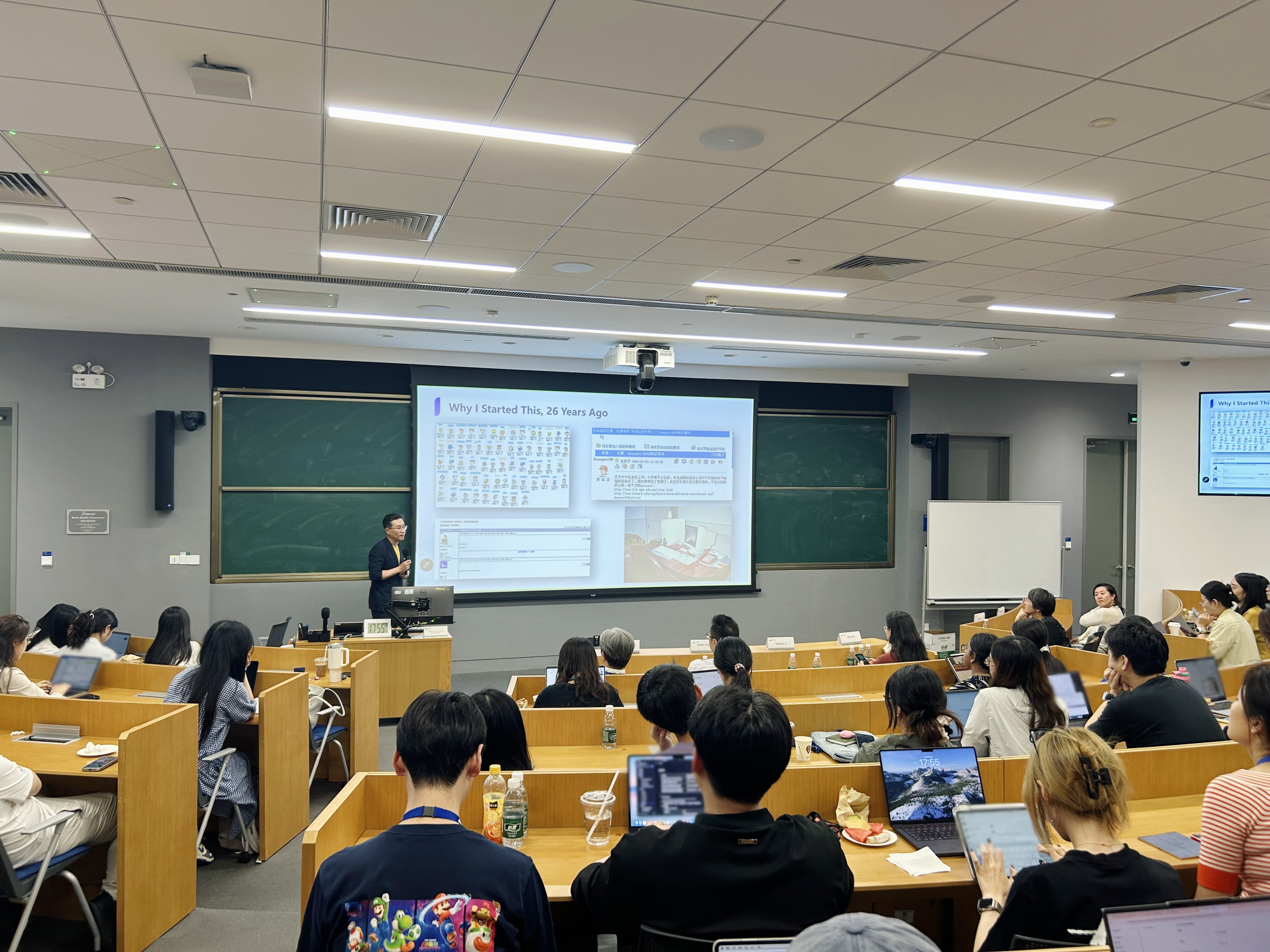
In his keynote address, Tiantian Li began by tracing DXY’s evolution — from a platform for sharing medical information to a professional community serving physicians and medical students. The real challenge in healthcare, he argued, is not simply accumulating knowledge and data, but translating that knowledge beyond papers, guidelines, and models into physicians’ clinical practice and people’s everyday health management. That, he said, is healthcare’s “last mile.”
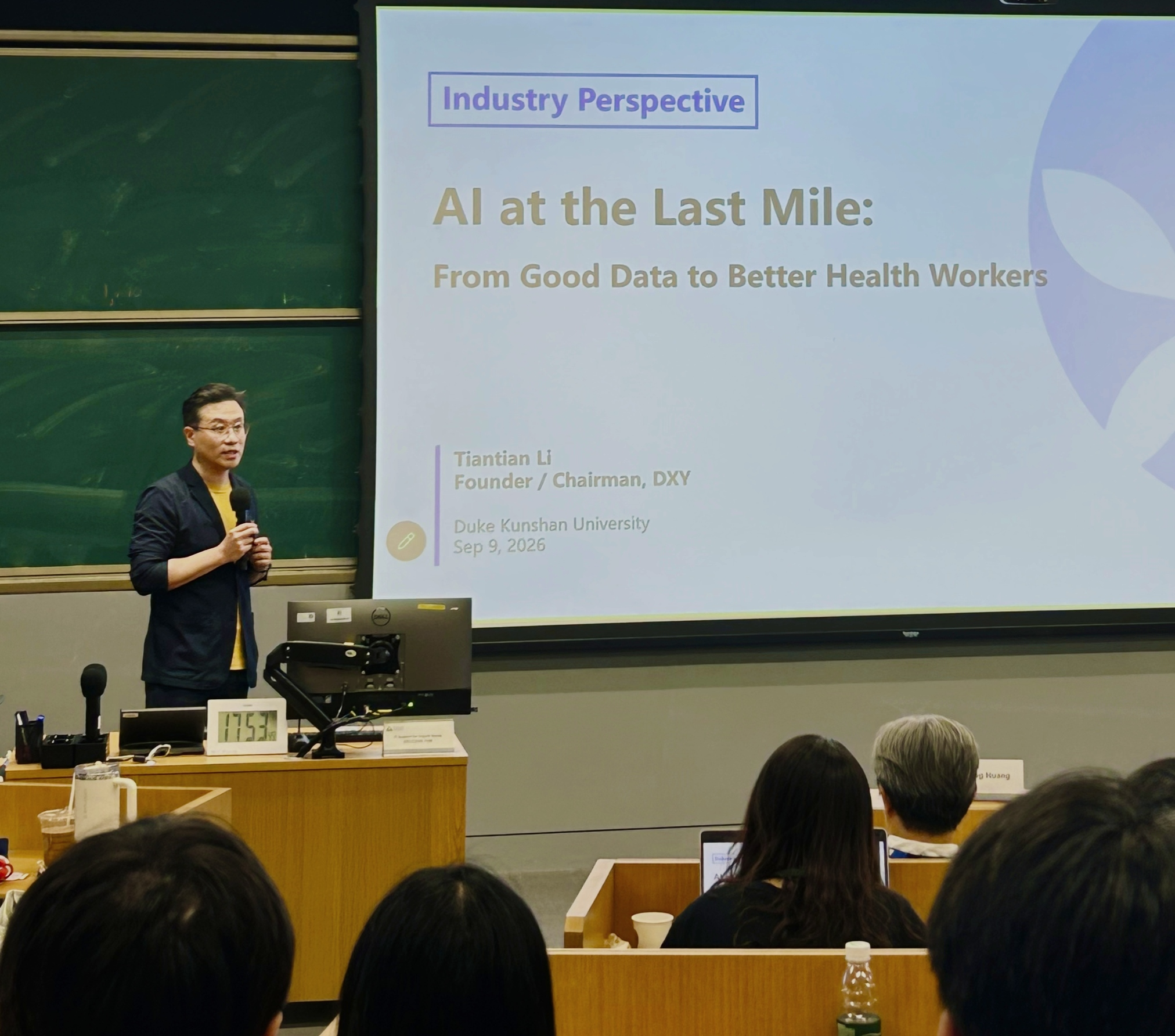
Addressing the theme of “from good data to better health workers,” Li noted that AI is quickly making its way into healthcare. But adoption does not automatically mean trust, let alone better patient outcomes. A DXY survey found that more than 80 percent of physicians surveyed have already used AI, and about 75 percent use it daily. At the same time, over 70 percent worried that AI-generated answers might be inaccurate or hard to verify, while more than 80 percent wanted such outputs backed by authoritative expertise. These findings suggest that healthcare AI needs to do more than deliver faster or more human-like responses if it wants to earn lasting trust in clinical settings — it must provide answers that are both more reliable and safer.
Building on this, Li framed the development of healthcare AI around three principles: Good Data, Good Approach, and Good Governance. Medical data, he said, should draw on global medical knowledge while also reflecting local disease patterns, health systems, and real-world practice. AI should support clinical decision-making, apply extra caution when serving children, older adults, and other vulnerable groups, and flag risks early when they arise. As Li stressed, the goal of healthcare AI is not to replace doctors, but to serve as a trusted partner in clinical care.
Drawing on DXY’s own experience, Li noted that the platform had accumulated more than six million real-world questions over the preceding eight months. These questions capture the challenges physicians actually face in clinical work and offer valuable insight into how AI can contribute to knowledge retrieval, clinical reasoning, and patient management. Still, he acknowledged, it is a long way from understanding what questions physicians ask, to determining whether those answers shape clinical decisions, and finally to establishing whether patients achieve better health outcomes. The value of AI must ultimately be tested in real healthcare settings and measured by its impact on the health of real populations.
From Discussion to Implementation: Seeking Real-World Impact
The event also included a panel discussion moderated by Prof. Lijing Yan, Professor of Global Health at DKU. Tiantian Li sat down with Professors Kaizhu Huang and Huaxiong Huang for a conversation on how AI can address real health needs.
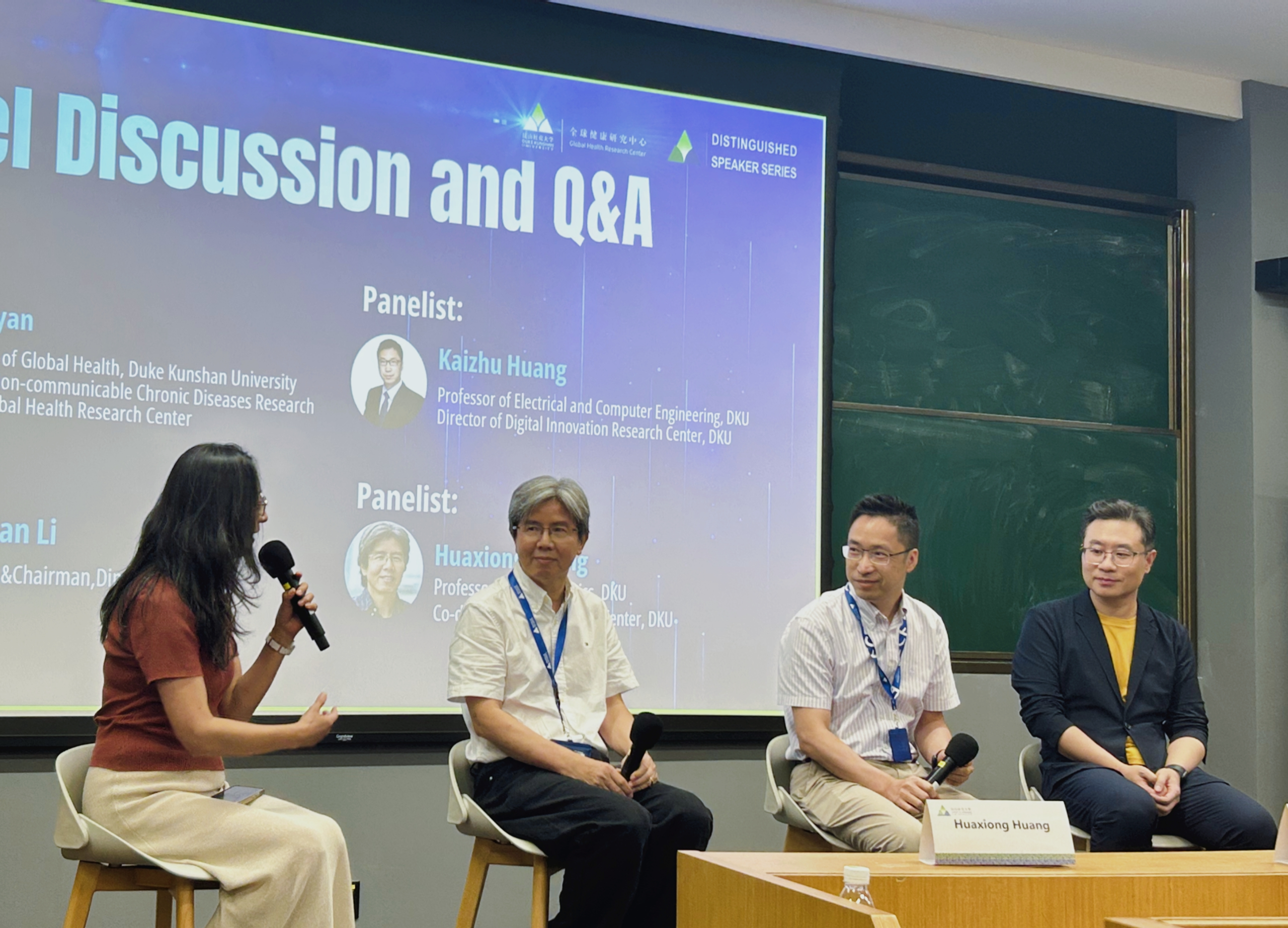
Reflecting on his own experience, Prof. Huaxiong Huang recalled how conversations with hospitals and medical researchers more than a decade ago led him to wonder why patients with diabetes could experience such different disease outcomes — and how he gradually began applying mathematical models to medical research. Healthcare challenges, he noted, are far more complex than typical technical problems. Real-world deployment, he argued, hinges not only on advances in mathematics and computing, but equally on sustained collaboration among healthcare providers, industry partners, and researchers.
Prof. Kaizhu Huang then shifted the discussion to trustworthy AI and data quality. Even a small change in medical data, he noted, can lead an AI system to a completely wrong conclusion. AI systems must therefore be reliable, interpretable, and aware of their own limitations. At the same time, the value of data lies not only in its accuracy and completeness, but also in its diversity. Only by combining global and local data can AI truly address the differences across populations, diseases, and healthcare settings.
Based on DXY’s industry experience and understanding of physicians’ needs, Li emphasized that AI products must be embedded in specific contexts — such as diagnosis, treatment, education, and research — rather than staying at the level of technical concepts. He also noted that collaboration among academia, industry, and healthcare stakeholders needs to balance research value, practical investment, and real-world impact. Safety must remain the top priority, especially in patient-facing AI applications, because no technology, however advanced, can guarantee perfect accuracy.
Looking Ahead: New Possibilities for AI and Health
Responding to audience questions, the three speakers broadened the discussion to include interdisciplinary learning, the use of medical data, and the future of AI. When a student asked about choosing between global health and data science as a field of study, Li encouraged young people to push the boundaries of their knowledge and explore subjects across public health, clinical medicine, data science, and beyond. Over time, he said, they could become professionals who bridge medicine and technology. He urged students to take full advantage of DKU’s international platform and interdisciplinary resources, combining a global outlook with hands-on practice in China. This combination, he added, would give students a key edge as they navigate the profound changes ahead in healthcare.
When the conversation turned to medical imaging, multimodal data, and AI’s ultimate impact on patient health outcomes, the speakers were candid about the challenges that remain in translating technology into practice. Li noted that real-world medical data are complex and fragmented. Even when AI changes how physicians work, it may not be possible to immediately demonstrate improvements in patient outcomes. The limitations of data, the specifics of each use case, and the realities of medical practice must therefore be fully taken into account when exploring new applications, with safety always the top priority. Professors Kaizhu Huang and Huaxiong Huang added that no single discipline can tackle such complex problems alone. Future breakthroughs will require teams that bring together medicine, public health, mathematics, computer science, industry, and other fields — bridging disciplinary divides through sustained dialogue and collaboration.
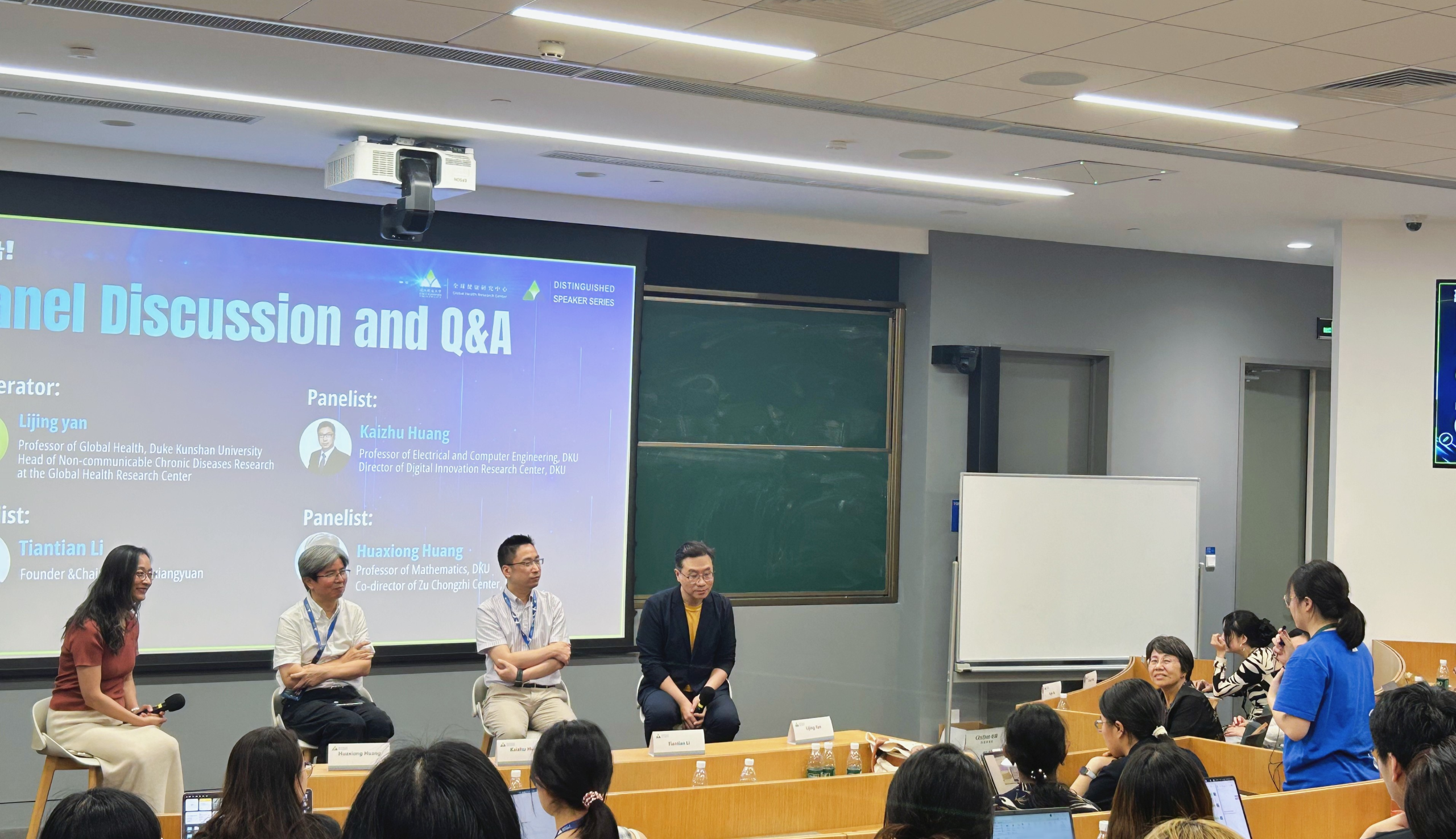
From the keynote address and interdisciplinary exchange to the in-depth conversation with faculty and students, the event kept circling back to one central question: How can artificial intelligence move beyond technology itself to meet the real needs of healthcare practice and population health? For the DKU community, the evening was more than an academic discussion on AI and health — it was also a powerful reminder of the value of interdisciplinary learning, innovative practice, and social responsibility. The discussion reflected a shared conviction among speakers and participants: the future of healthcare AI will depend not only on technological advances, but also on the ability to turn innovation into meaningful improvements in clinical practice and population health.
Translator | Wenxi Ge; Yijie Nan
Layout | Wenxiao Chen