

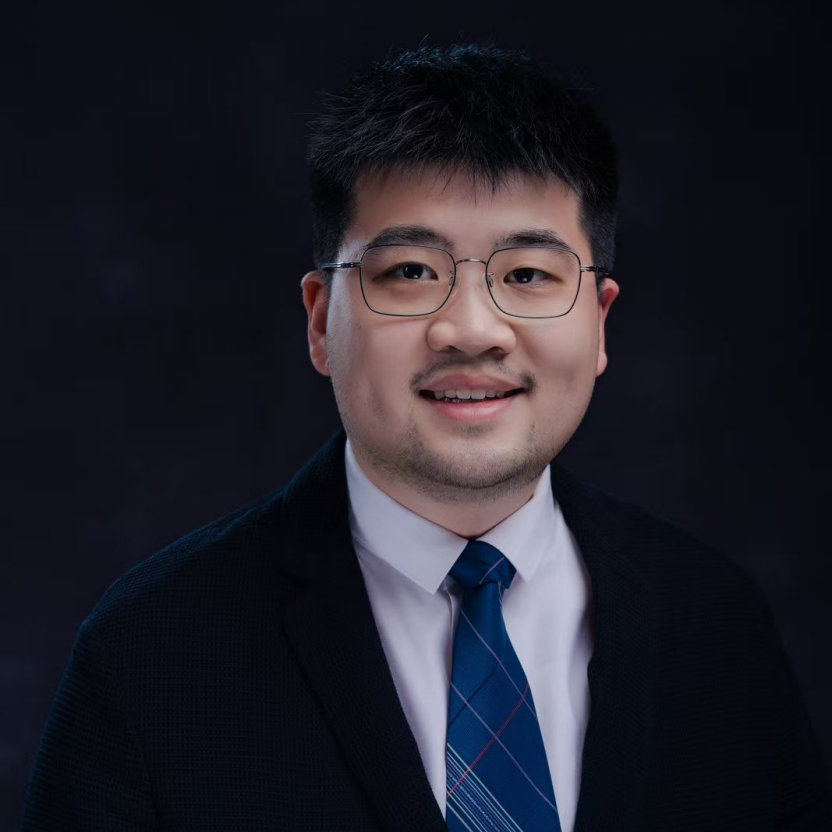
Xiangyu Shen (Student interview)
“Looking back, arriving at a school filled with outstanding peers as a fairly ordinary student was both exhilarating and nerve-wracking, at times even painful, yet ultimately deeply rewarding.” With these words, Xiangyu Shen reflects on his studying experience at Duke Kunshan University (DKU). Originally trained in Bioengineering as an undergraduate, Shen has since graduated from DKU’s Master of Science in Global Health program and now works at Innovent Biologics as a Quality Assurance Engineer. His journey, from uncertainty about the future of “biochemistry-related” majors to a clear research direction, mirrors the transformative potential of DKU’s distinctive educational model.
01 Starting at DKU
For Shen, the decision to pursue graduate study was shaped by both practical considerations and personal aspirations.
“An undergraduate degree in bioengineering alone often makes it difficult to secure a job with competitive salary. Graduate study became a necessary step to broaden my career options,” he explained candidly. At the same time, he believed that for students in fields such as biology, chemistry, environmental science, and materials science, further study is essential to access broader academic horizons and top-tier research resources.
While preparing for China’s graduate entrance exams, Shen was also leading a team for the “Challenge Cup” National Competition, leaving him with an exceptionally tight schedule. During this period, he began exploring joint Sino-foreign universities. As he recalls, DKU quickly stood out as his top choice, thanks to Duke University’s global reputation, its faculty’s extensive research experience, and the advantage of geographic proximity.
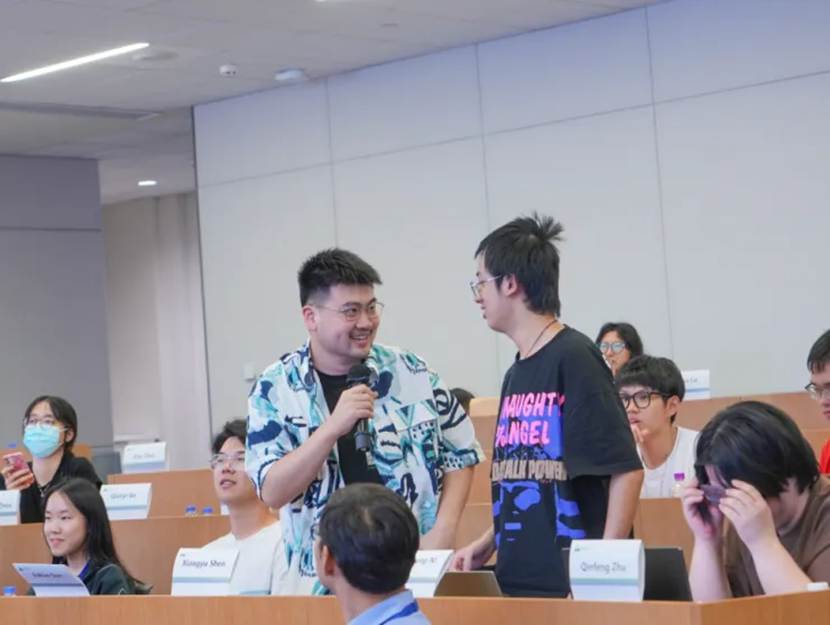
Photo | DKU Summer Institute on Health Data Science (Xiangyu Shen, left)
After enrolling, Shen was met with both excitement and a sense of cultural shock. The DKU student community is more diverse than he had imagined, and the professors were approachable and down-to-earth. Yet this seemingly relaxed environment, what he describes as a form of “gentle freedom”, was initially a challenging environment to adapt. “As I experienced it, the emphasis here is on guiding students to explore independently, rather than managing them through authority,” he noted. Without clear-cut “standard answers,” Shen found himself struggling at first. Accustomed to structured learning, he experienced moments of deep self-doubt in this more open-ended academic landscape.
This sense of unease was further amplified by comparison with his peers. Surrounded by classmates with exceptional academic training and global perspectives, Shen often felt like an amateur suddenly placed in a professional arena. “It was the first time I truly understood what people mean by a ‘dimensional reduction strike’—being comprehensively outmatched,” he joked self-deprecatingly. “Behind that sense of novelty was a real feeling of pressure. Looking back, it was a moment when all my usual confidence seemed to collapse.”
02 Finding the Best Rhythm
When Shen first arrived at DKU, he admits he felt somewhat disoriented. The all-around intensity of the experience, whether it was the excellence of his peers or the hands-off teaching style of professors, left him wondering at times if he had stepped into the wrong setting altogether. But life moved on, and for someone who had long been accustomed to following instructions, his way forward was grounded and practical: start in the lab, then step into the classroom.
For Shen, the laboratory became the quickest place to rebuild confidence. His master’s research topic may sound modest, but it is deeply practical: studying Ralstonia solanacearum, a bacterium responsible for plant disease. “Simply put, it’s a pathogen that makes plants ‘sick.’ I focus on how strains from different regions vary, why some are sensitive to cold while others tolerate heat,” he explained. Through gene sequencing, Shen aims to help farmers develop more targeted treatment strategies, replacing the inefficient and environmentally harmful one-size-fits-all use of pesticides.
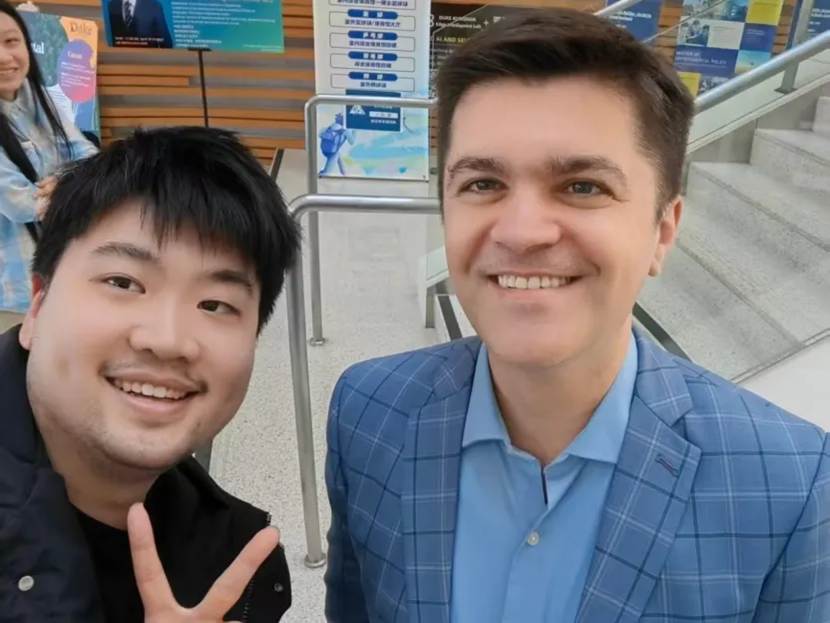
Photo | Graduation Group Photo (Xiangyu Shen, left; Professor Marius Walmsiedal, right)
This kind of research demands both patience and independence. “Professor Huansheng Cao gave me a great deal of autonomy, he doesn’t monitor every step you take,” Shen noted. What initially felt like an unsettling lack of structure gradually became a driving force. He was no longer a technician mechanically operating instruments, but a researcher responsible for understanding the principles behind every experimental outcome. Building on his undergraduate work with mulberry bacterial wilt, and supported by DKU’s advanced research facilities, his project began to take shape.
If the laboratory helped him cultivate depth, the classroom expanded his intellectual breadth. Shen recalls two courses in particular. In Professor Long’s course on health systems in developing countries, teaching rarely followed the textbook, one question could spark an extended discussion, making each session feel like an exploration. In contrast, Professor Marius’s course on global health research ethics was rigorously structured, almost like assembling a precise construction where every piece had to fit perfectly. This rhythm, shifting between open-ended exploration and meticulous logic, ultimately reshaped his approach to learning, breaking his long-held habit of searching for a single “correct” answer.
03 Cross-Disciplinary Sparks: Embracing a Different Path
This transformation became most evident in group work. In the past, Shen approached problems with a distinctly linear mindset: if the destination is clear, why not take the shortest route?
At DKU, however, he found himself collaborating with peers from vastly different backgrounds: students of art, finance, and beyond. At first, he struggled to understand their ways of thinking, even feeling that their approaches were unnecessarily indirect. Over time, his perspective began to shift. He came to see that such differences, rather than being obstacles, could lead to more creative and effective outcomes. “As long as the logic holds and the work is delivered well and on time, the specific approach each person takes doesn’t really matter,” he reflected. This ability to seek common ground while respecting differences gradually reshaped him. From someone who once felt out of place, he grew into a versatile collaborator, capable of working across disciplines and leading teams composed of individuals with diverse perspectives.
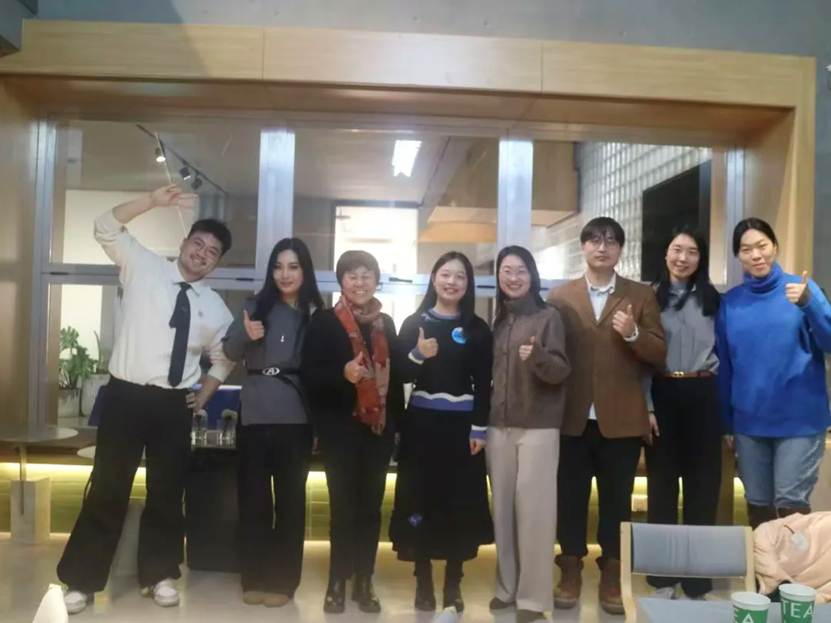
Photo | In-Person Alumni Gathering
04 Bring the “Invisible Toolkit” for the First Job
Over two years at DKU, Shen not only earned a degree, but also developed a set of “survival tools” that continue to serve him in the workplace. Looking back, his journey was not without setbacks. Like many fresh graduates, he once submitted over 30 job applications with little response.
After enrolling at DKU, the university’s Career Services Office became a crucial source of support. Rather than offering abstract advice, career advisors worked closely with him, refining his résumé line by line, transforming vague descriptions into concrete, result-driven experiences. More importantly, they helped him focus. Instead of sending out applications indiscriminately, he learned to identify positions aligned with his background and pursue them strategically. This shift quickly paid off, leading to an internship opportunity at DSM-Firmenich, which marked a turning point in his professional journey.
Once he formally entered the workforce, Shen realized that the assignments that once felt overwhelming at DKU had become some of his greatest assets. During his graduate studies, he had tackled course papers approaching 40,000 words. The process, revising repeatedly and constructing tightly reasoned arguments, gradually became second nature. “Now, when I handle reports and documentation at work, it feels almost effortless,” he said. In a fast-paced professional environment, this ability to articulate complex ideas with clarity and precision has allowed him to stand out as both composed and persuasive among his peers.
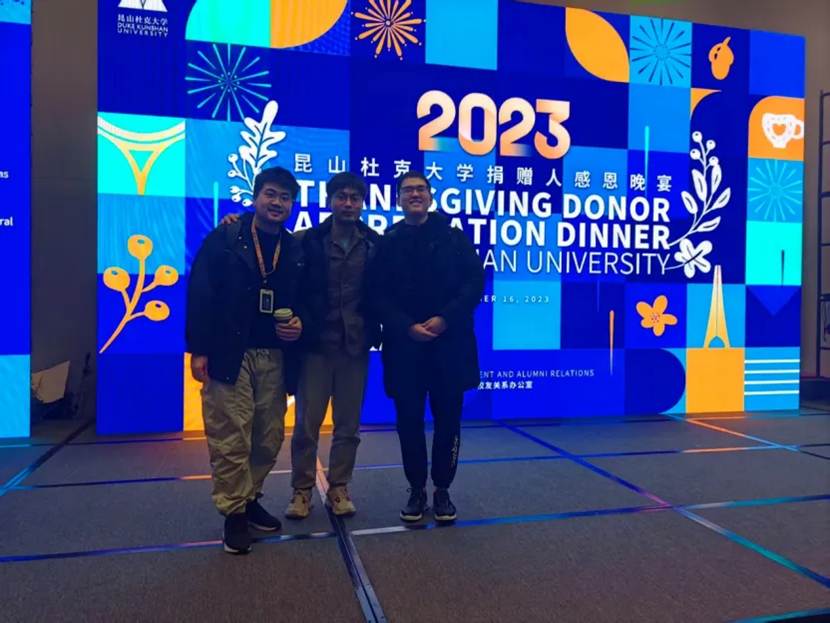
Photo | Duke Kunshan University Donor Dinner (Xiangyu Shen, left)
Today, Shen works as a Quality Assurance Engineer at Innovent Biologics. While the title may sound highly technical, he describes the role as, in many ways, a form of “professional diplomacy.” On a daily basis, he handles patient complaints and product quality issues, frequently coordinating across departments: from laboratory teams to sales. “The ability to navigate diverse perspectives that I developed at DKU has been nothing short of a lifeline,” he said.
When working with laboratory staff, precision is paramount, every claim must be backed by data, with no room for ambiguity. In contrast, when collaborating with goal-driven sales teams, efficiency and clarity take precedence. The adaptability he cultivated on campus, the ability to shift seamlessly between different modes of communication and expectations, has significantly reduced internal friction in his work. What Shen achieved at DKU, therefore, goes far beyond academic advancement. It was a comprehensive transformation, one that reshaped both his self-understanding and his capacity to navigate the complexities of professional life.
05 Advice for Future Students
For undergraduates considering applying to DKU, Shen offers three key pieces of advice:
- Understand the admissions criteria: Conduct a comprehensive self-assessment: meeting the baseline requirements is the first essential step.
- Prepare mentally: With a highly diverse campus culture and student body, maintaining an open mindset and embracing differences is crucial.
- Strengthen foundational skills: Build strong English speaking and academic reading abilities in advance to keep pace with the rigorous curriculum and avoid feeling overwhelmed after enrollment.
“Compared with peers who have achieved extraordinary accomplishments, I’m still just an ordinary master’s graduate,” Shen reflected. “But I’ve come to believe that as long as you keep working hard and continue learning every day, even ordinary people can become ‘extraordinary.’”
He encourages future students to remain patient in their growth. “Don’t be afraid of moments of confusion or the sense of falling behind. What makes DKU truly valuable is not the ready-made answers, but the freedom and ability it gives you to find your own.” He adds that every late night spent wrestling with demanding papers and every experience of cross-disciplinary collaboration becomes a steppingstone toward future professional success. “In this unique journey, I hope you not only come to see the world more clearly, but also rediscover a stronger, more resilient version of yourself.”
From uncertainty to clarity, from the laboratory to the workplace, Shen’s journey reflects the path of many DKU students growing within an interdisciplinary and multicultural environment. As he puts it, studying at DKU is an experience where challenge and fulfillment coexist, where pressure and growth go hand in hand. And it is precisely through this process of stretching one’s limits that true personal and intellectual transformation takes shape.