


April 9, 2026 – The “Co-Creating the Future of Global Health with China MedTech” International Forum was held at the National Exhibition and Convention Center (Shanghai). Organized by the Shanghai Global Health Innovation Institute and Duke Kunshan University, the event convened leaders from academia, industry, and research to explore how medical device innovation can advance global health. Discussions focused on new opportunities, emerging technologies, and collaborative pathways, with a shared goal of integrating “China Solutions” into global health governance.
During the forum, experts and delegates from various sectors engaged in discussions around three major themes: the global health market landscape, the globalization of the medical technology innovation value chain, and ecosystem building. The event brought together international organizations, research institutions, and corporate representatives to foster collaboration. Speakers from China CDC, Africa CDC, Asian Development Bank, Gates Foundation, London School of Hygiene & Tropical Medicine, Duke University, Duke-NUS Medical School, and other institutions shared insights on global health trends, localization policies, financing support, WHO prequalification, regulatory harmonization, international public procurement, and China-Africa health cooperation, providing strategic guidance for building a comprehensive support system across the entire value chain.
The Present and Future Trend of Global Health
Dr. Tang Shenglan, Mary D.B.T & James H. Semans International Distinguished Professor, Duke University School of Medicine and Co-Director of the Global Health Research Center at Duke Kunshan University, delivered a keynote address titled “Global Health Then and Now: Unmet Needs and Future of Priorities for Innovation.” He recapped global health achievements and current challenges, including infectious diseases, maternal and child health, and non-communicable diseases, while also analyzing political and economic pressures such as declining aid and Africa’s push for sovereignty. His report highlighted low-cost technology innovation, artificial intelligence, and localized manufacturing as key pathways to address future unmet needs.
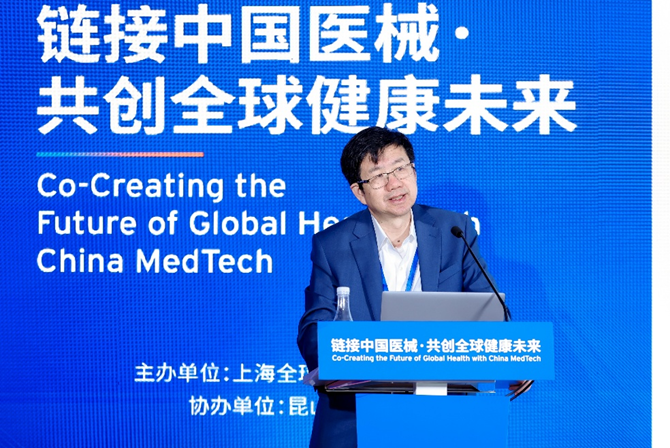
(Professor Shenglan Tang delivered a speech)
Professor Xu Fujie, Co-Director of the Global Health Program at Duke Kunshan University, moderated the roundtable “The Emergence of Global South: Unmet Needs, Market Opportunities, and the Role of Innovation.” The discussion highlighted that while many low-cost innovations exist, workforce shortages, regulatory fragmentation, and weak supply chains continue to hinder product adoption. The panel stressed that innovation must align with the infrastructure settings of low- and middle-income countries, and that localized partnerships, demand aggregation, and innovative financing are essential to clearing the path from R&D to market.
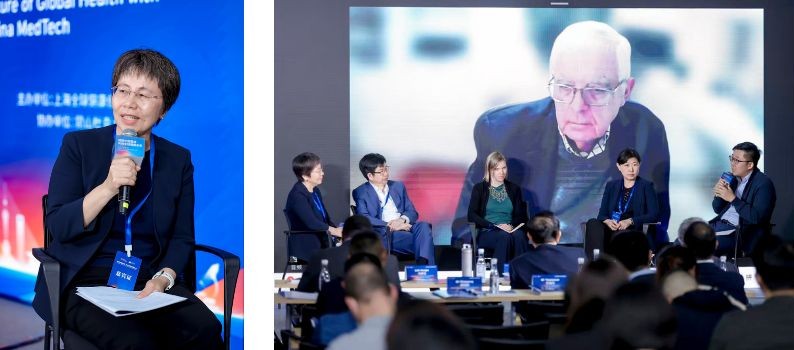
(Professor Fujie Xu moderated roundtable on “The Emergence of Global South: Unmet Needs, Market Opportunities, and the Role of Innovation”)
Bridge China Innovation to Advance Global Health
Officially launched on February 11, 2026, the Shanghai Global Health Innovation Institute (GHII) is China’s first pioneering product development and translation institute dedicated to global health. The initial five-year program funding for the institute is jointly provided by Shanghai and the Gates Foundation. Focusing on the health needs of low- and middle-income countries, GHII aims to transform scientific and industrial capabilities, both from China and globally, into affordable, accessible, and scalable health products and solutions.
Dr. He Ruyi, CEO of GHII, shared that the Institute has identified and launched its first patch of innovation projects targeting low- and middle-income countries, with a focus on infectious diseases (TB and malaria), innovative in vitro diagnostics, and maternal and child health. In the field of innovative IVD, GHII is supporting the development of tongue swab diagnostics for drug-resistant TB tailored to low-resource settings, aiming to improve early detection. In maternal and child health, the Institute is exploring affordable, scalable solutions for pregnancy care, such as portable fundus cameras for screening high-risk pregnant women.
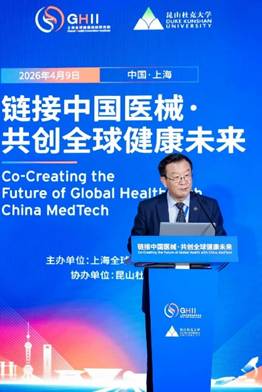
(He Ruyi, CEO of GHII, gave opening remarks)
Maike Scharp, Deputy Director of the Gates Foundation’s Diagnostics Initiative, pointed out that the accessibility of global health diagnostics requires the synergy of technology and system innovations. Through the shaping of the demand-side market, enterprises should be guided to increase their investment.
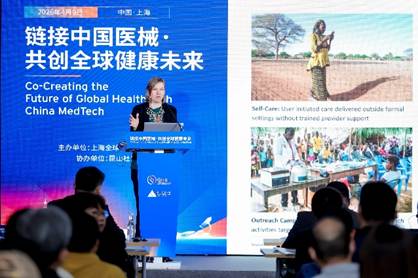
(Maike Scharp, Deputy Director of the Gates Foundation’s Diagnostics Initiative, presented in the forum)
Yang Min, Senior Program Officer at the Gates Foundation China Country Office, stated that the core challenge in global health lies in how to enable existing or achievable technologies to be used in resource-constrained settings. He expressed hope that more Chinese companies will start from real-world needs to develop products that are affordable, accessible, and sustainable, thereby advancing the application of quality diagnostic technologies among broader populations and contributing to the realization of global health equity.
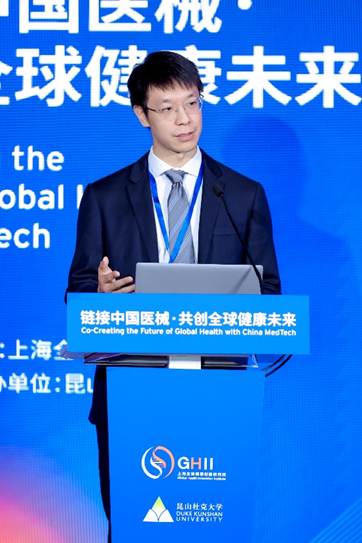
(Yang Min, Senior Program Officer at the Gates Foundation China Country Office,delivered opening remarks)
Shanghai not only hosts a world-class cluster for pharmaceutical research, development, and manufacturing, but also possesses the technological expertise and industrial infrastructure necessary to deliver high-quality, affordable health products to global markets.Liu Houjia, Director of the Shanghai Center of Biomedicine Development, noted in his opening remarks that an increasing number of Shanghai companies that, driven by innovation and committed to quality, are actively aligning with international standards and engaging in global health efforts. To support this, Shanghai offers up to 30% of R&D investment – capped at 10 million CNY per project – for innovative drugs and devices that secure regulatory approval from multiple countries and achieve local sales.
During the forum, the lead person of diagnostics at the Shanghai Global Health Innovation Institute also shared how the Institute helps companies define and validate products for low-resource settings, support the WHO prequalification process and multilateral procurement, and the products’ local implementation – key steps on the path from innovation to impact.
Leverage enterprises’ practices and co-create the Go-Global 2.0
The establishment of a collaborative ecosystem for global health is inextricably linked to cross-sector partnerships. As early as 2024, the Centre of Regulatory Excellence (CoRE) at Duke-NUS Medical School, together with Duke Kunshan University, launched the “CREATInG Initiative” aimed at strengthening strategic and regulatory capacity building for IVD companies in China and Asia.
Professor John Lim, Founding Executive Director of CoRE at Duke-NUS Medical School and co-PI of the program, shared insights on the topic “From Bottleneck to Catalyst: Enabling Global MedTech Innovation through Changed Regulatory Paradigms” at the conference. Assistant Professor Tan-Koi Wei Chuen of Health Regulation, Regulatory Systems Strengthening & Strategy at CoRE, moderated the roundtable discussion titled “Forging Cross-Sector Synergy: A New Blueprint for International Collaboration in Health Innovation.” Together with representatives from global partners such as the Asian Development Bank and ASKHealth Asia, and the Global Health Innovation Institute, the discussion explored critical pathways for companies and relevant stakeholders in the ecosystem – from innovation to adoption and from local markets to global reach.
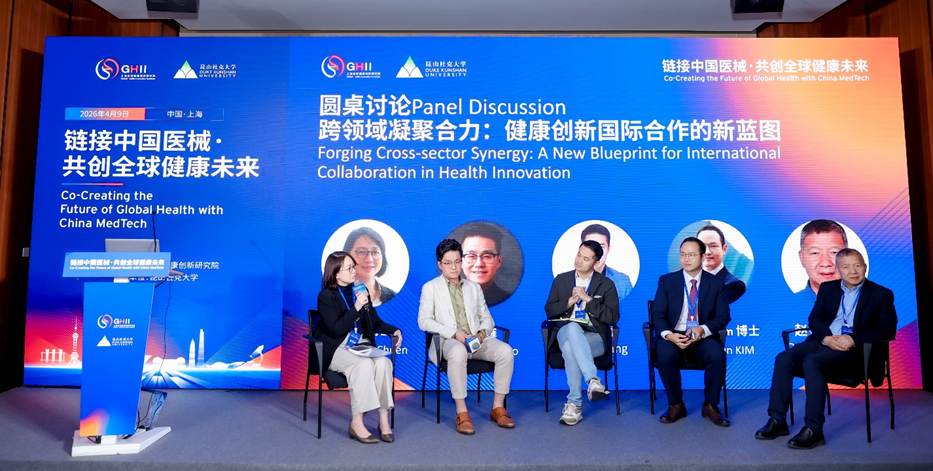
(Assistant Professor Tan-Koi Wei Chuen moderated the roundtable discussion titled “Forging Cross-Sector Synergy: A New Blueprint for International Collaboration in Health Innovation.”)
At the forum, Chinese medical device companies demonstrated their global health innovations. Some presented high-throughput, open-platform PCR molecular diagnostic solutions tailored for large-scale screening in developing countries – addressing HIV viral load testing and TB drug resistance detection to improve access to infectious disease diagnostics. Others focused on high-risk pregnancy diagnosis, leveraging AI-powered retinal imaging and handheld ultrasound devices to support maternal and child health equity in low- and middle-income countries.
During the forum, the Shanghai Global Health Innovation Institute signed strategic cooperation agreements with several medtech companies. Through its global resource network and translation platform, the Institute will help them connect with international procurement channels, participate in global health projects, accelerate the market entry of Chinese diagnostic innovations in low- and middle-income countries, and jointly explore a “Go-Global 2.0” pathway for the Chinese innovators.