

Seoul, Republic of Korea, June 29–30, 2026 — At a time when global health is facing one of its most challenging periods in decades—with declining official development assistance (ODA), growing geopolitical uncertainty, and increasing health threats ranging from infectious diseases and non-communicable diseases to climate-related risks and health workforce shortages—more than 30 government officials, policymakers, researchers, and global health leaders from China, the Republic of Korea, and international organizations gathered in Seoul to explore a new model of regional cooperation.
The First China–Korea Forum on Global Health Development, jointly organized by the Global Health Research Center (GHRC) at Duke Kunshan University (DKU) and the Center for Global Health Research (CGHR) at Seoul National University (SNU), focused on the theme “Global Health Collaboration in Transition: China–Korea Perspectives on Effectiveness, Equity, and Sustainability.” The forum highlighted how China and Korea can work together to help shape a more resilient, equitable, and sustainable future for global health.
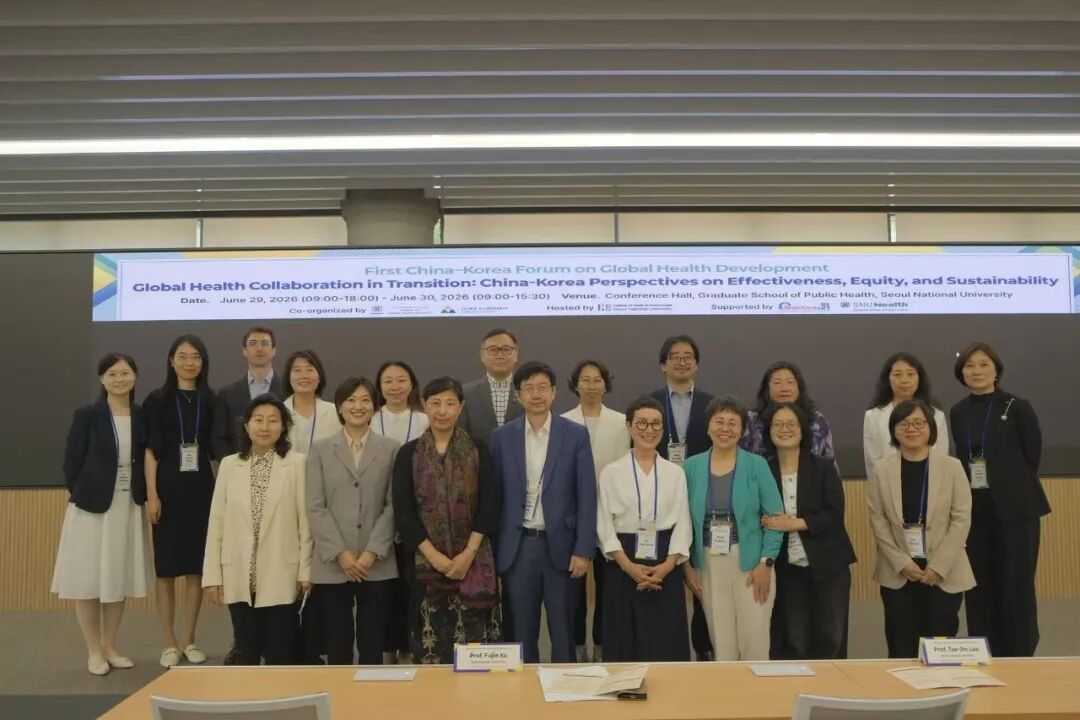
Group Photo of Speakers
The forum opened with welcoming remarks from Prof. Sun-Young Kim, Director of the SNU Center for Global Health Research; Prof. Fujie Xu, Co-Director of the DKU Global Health Research Center; and Prof. Tae-Jin Lee, Dean of the Graduate School of Public Health at Seoul National University. They emphasized that, in an era of shrinking development assistance and increasingly complex global health challenges, stronger academic partnerships and evidence-informed policymaking are more important than ever.
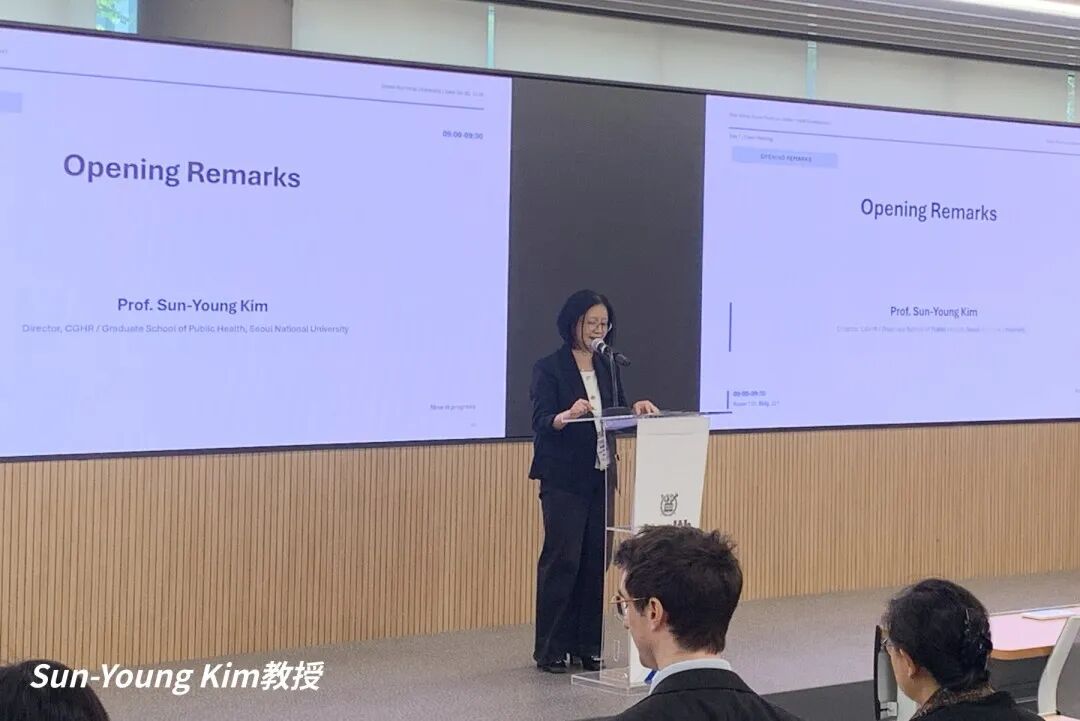
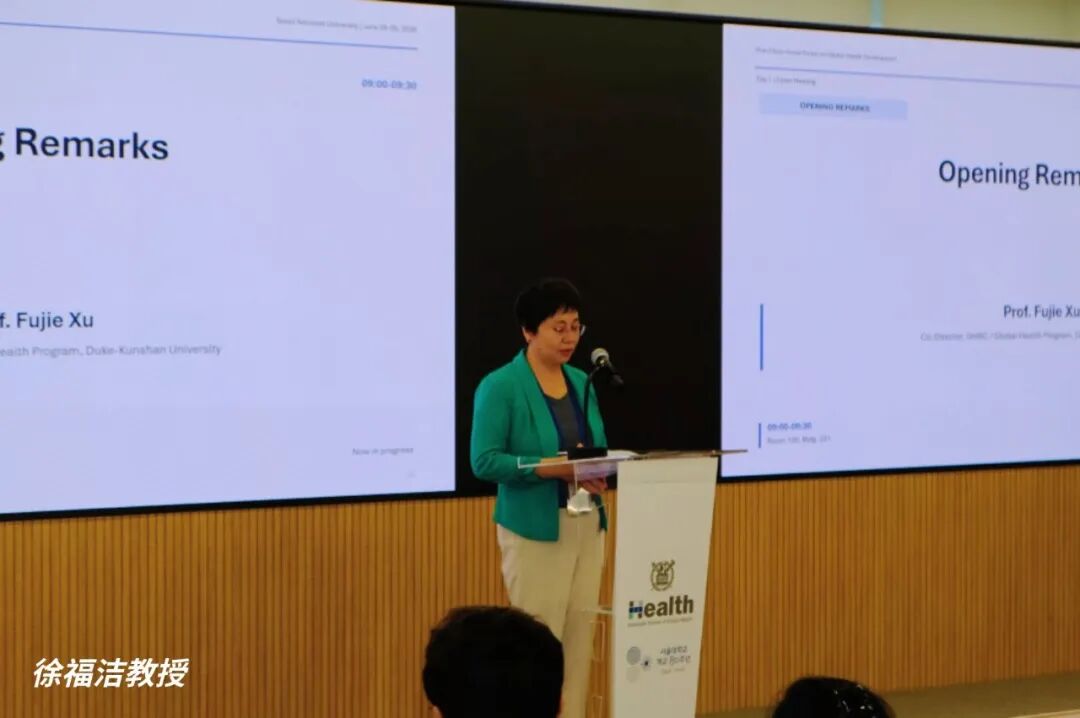
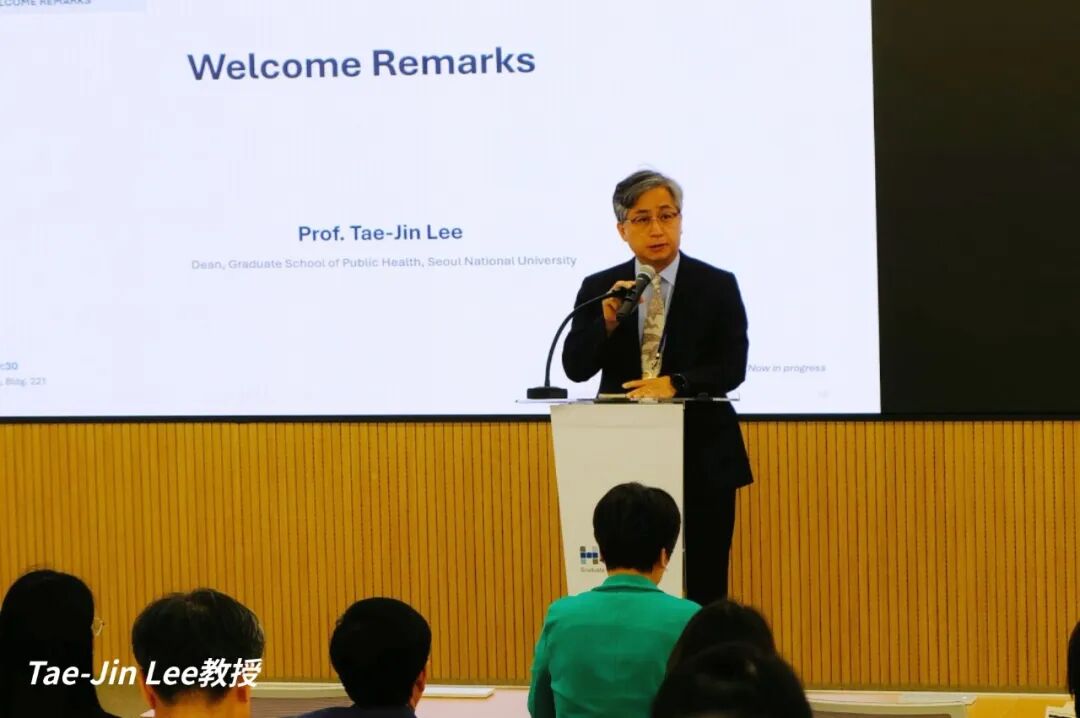
Welcoming remarks
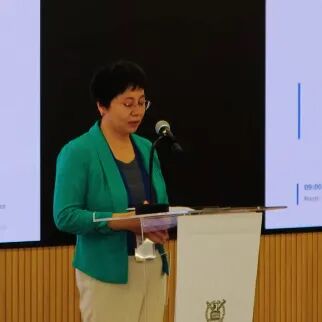
“The challenges facing global health today are too complex for any country to address alone. Through partnership, mutual learning, and evidence-based collaboration, China and the Republic of Korea can make meaningful contributions to improving health and well-being around the world,” said Prof. Fujie Xu, Co-Director of the Global Health Research Center at Duke Kunshan University.
Throughout the two-day forum, participants examined how China and Korea can strengthen collaboration in global health policy, research, education, and program implementation. Discussions covered China–Africa health cooperation, Korea’s overseas health assistance, global health diplomacy, implementation experiences in low- and middle-income countries (LMICs), and the evolving role of universities in supporting government-led global health initiatives.
A central theme throughout the forum was how countries can maximize the impact of limited global health resources. Participants agreed that future global health partnerships should place greater emphasis on evidence generation, implementation research, policy translation, accountability, and long-term sustainability rather than simply expanding financial assistance. Universities, research institutions, and public health agencies were recognized as playing an increasingly important role in generating evidence, evaluating programs, strengthening implementation, and training the next generation of global health leaders.
The forum also looked beyond diagnosing today’s challenges to identifying practical ways forward. During interactive panel discussions and breakout sessions, participants identified several priorities for future China–Korea collaboration, including health systems strengthening, universal health coverage, digital health, prevention and control of non-communicable diseases, health workforce development, and implementation science. Participants also highlighted the importance of translating research findings into policies and practice to improve health outcomes in partner countries.
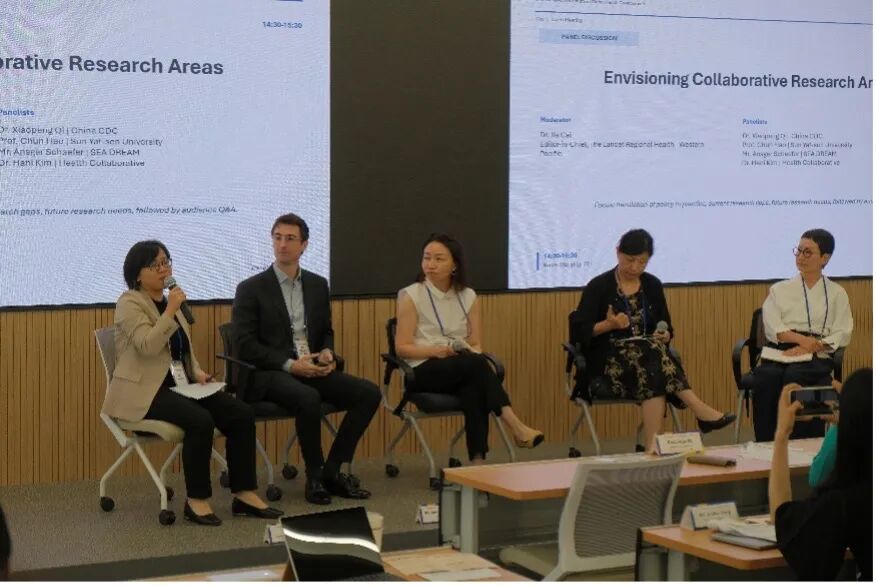
Panel discussion
The second day shifted from dialogue to action. Academic leaders and researchers from both countries held a closed working meeting to identify concrete collaborative research projects, develop joint education and training initiatives, explore funding opportunities, and establish a roadmap for a long-term China–Korea collaborative research network. Participants also agreed to pursue joint publications, policy briefs, and collaborative grant applications to generate evidence that can better inform health policy and practice across Asia and other low- and middle-income regions.
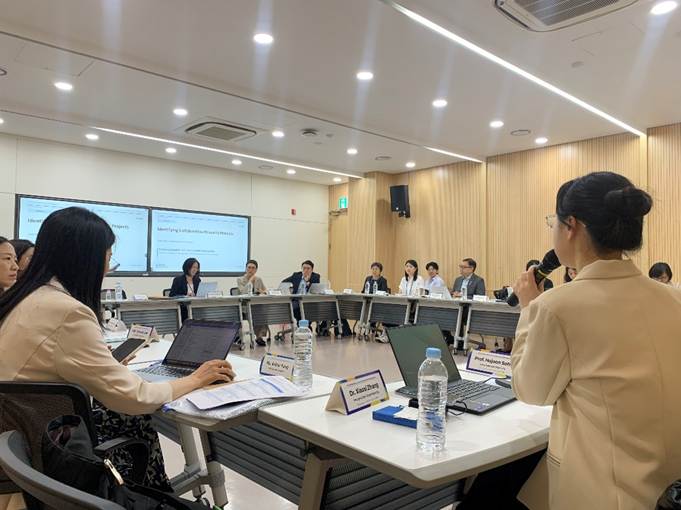
Closed-Door Working Session
In his closing remarks, Prof. Shenglan Tang, Co-Director of the DKU Global Health Research Center, emphasized that the forum should be viewed not as the conclusion of a meeting but as the beginning of a long-term collaborative partnership.

“Today’s discussions demonstrated that neither China nor the Republic of Korea can address today’s global health challenges alone. The future requires partnerships that are evidence-based, mutually beneficial, and focused on measurable impact. Our ambition is to build a collaborative network that produces high-quality research, supports policy development, trains future global health leaders, and ultimately contributes to better health across Asia, Africa, and other low- and middle-income regions.”
The forum concluded with the announcement that Duke Kunshan University will host the Second China–Korea Forum on Global Health Development in Kunshan, China, in 2027. Participants expressed a shared commitment to transforming the forum into a long-term regional platform that brings together universities, governments, international organizations, and development partners to generate policy-relevant evidence and strengthen global health collaboration in an increasingly uncertain world.
Author | GHRC
Layout | Yijie Nan