

From August 4 to 7, Joseph Egger, Director of Academic Programs, and Lysa MacKeen, Deputy Director of Academic Programs at the Duke Global Health Institute, visited Duke Kunshan University for a series of discussions and activities focused on further strengthening collaboration in global health education.
Connecting the Two Campuses
How Duke University and Duke Kunshan University can further leverage their respective educational strengths to provide students with richer learning experiences was a key focus of the visit.
During their time at DKU, Joseph and Lysa met with Prof. Xin Li, Associate Vice-Chancellor for Graduate Studies and Research, Duke Kunshan University, to learn more about the university’s graduate education, research development, and interdisciplinary talent development. They then met with Prof. Fujie Xu, Co-Director of the Global Health Program, and the global health education team to discuss curriculum development, student training, and program support.
Beyond curriculum and teaching, the two sides also explored opportunities for interdisciplinary projects and experiential learning. During the visit, Joseph and Lysa spoke with the Bass Connections (Global Health Track) Team, discussing ways to encourage students and faculty from different academic backgrounds to engage in research and practice addressing complex real-world challenges.
Conversing with Students
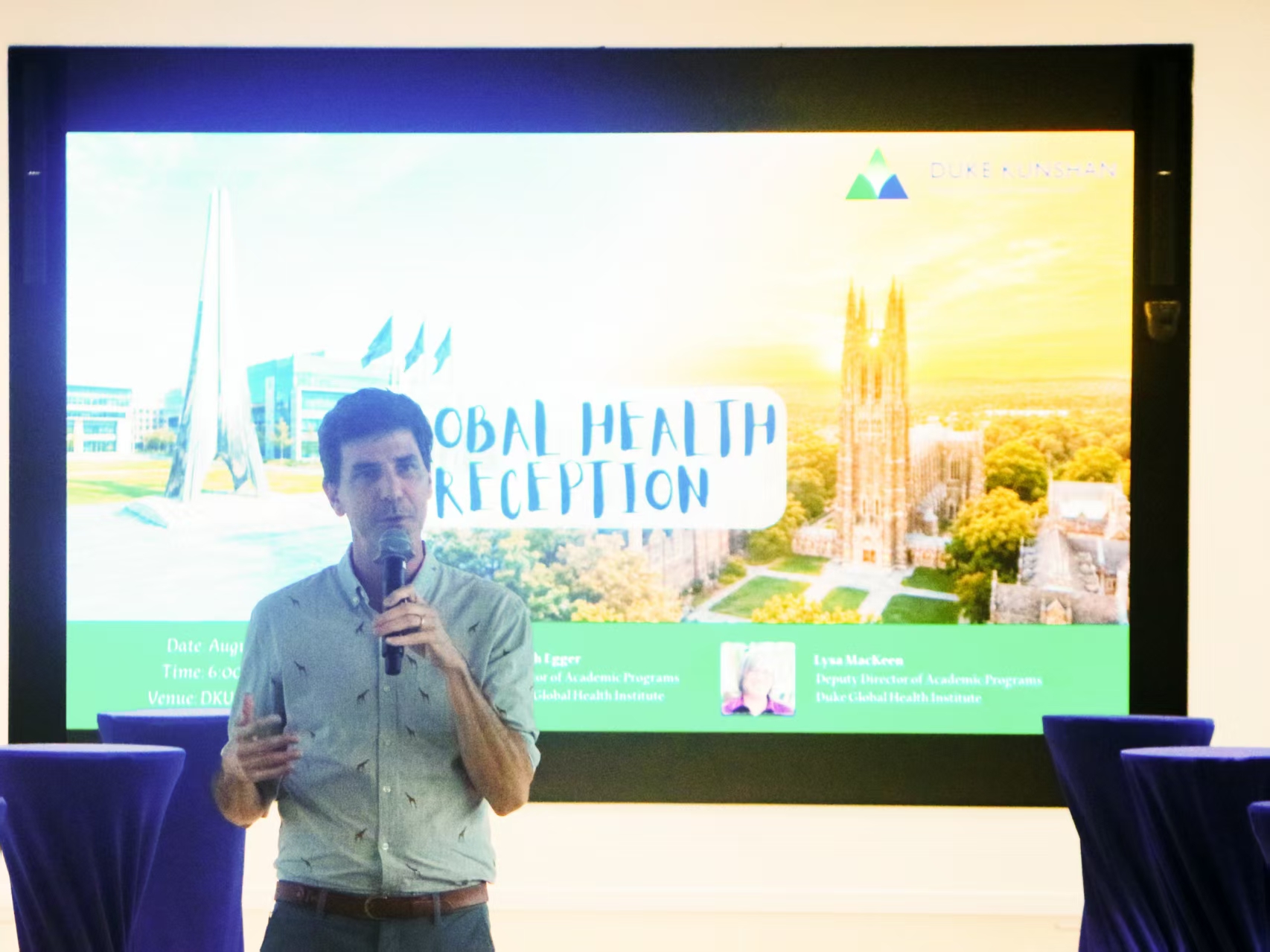
Opening remarks by Joseph Egger.
On the evening of August 5, Joseph and Lysa met with students and faculty in global health for an open discussion on topics including course selection, cross-campus learning, and future plans. Through sharing and Q&A, students at different stages of their academic journeys gained new perspectives and greater clarity about their future studies and career paths.
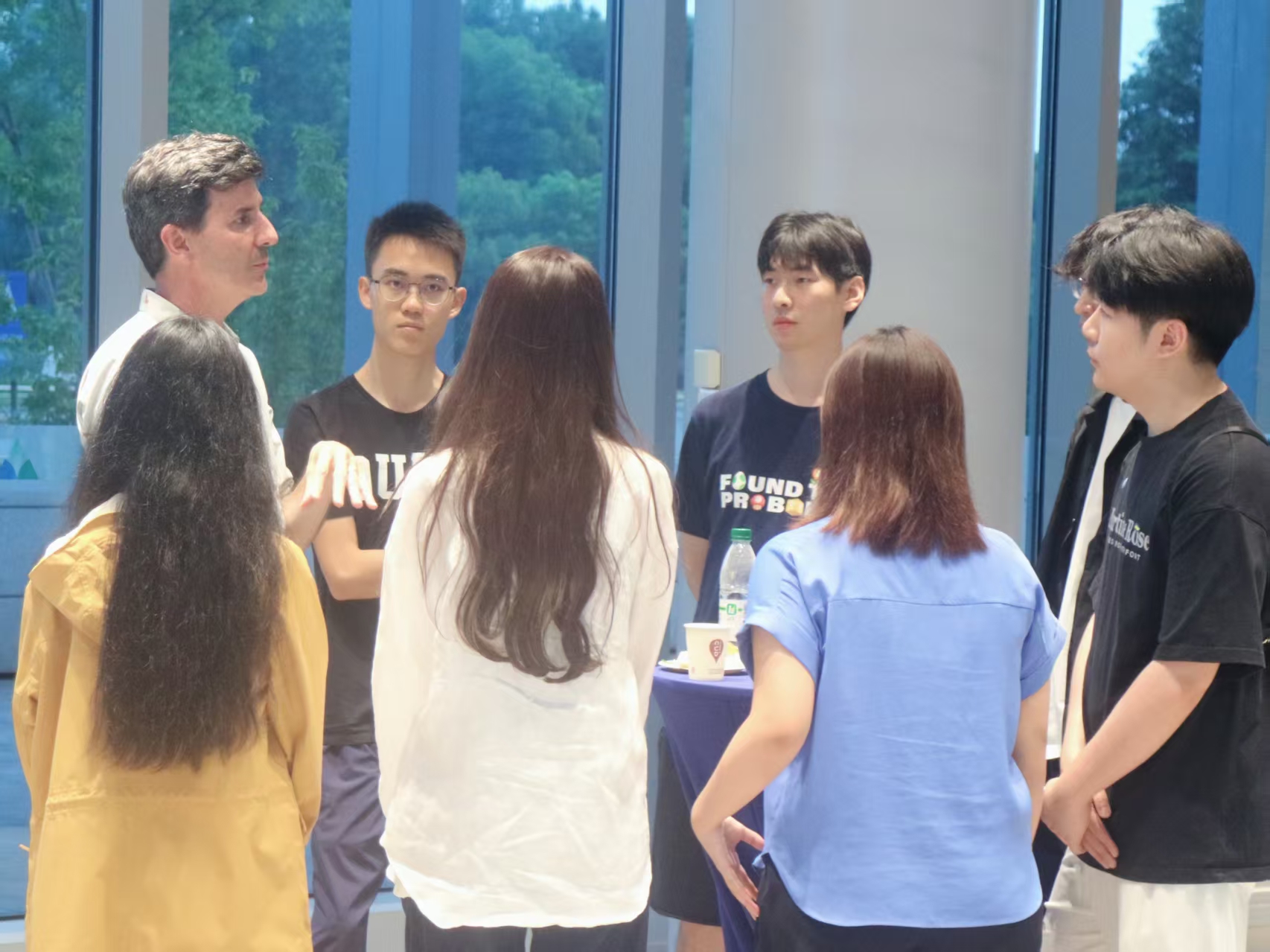
Joseph Egger (first from left) talks with students.
For students preparing to enter graduate school, adapting quickly to a new stage of study was a common concern. Dantong Zhu, a 2026 graduate of Duke Kunshan University who will soon enter the program to pursue a master’s degree, said that what attracted her most was not a specific course syllabus, but the “chemistry” that emerged among classmates from diverse backgrounds. Although formal classes had not yet begun, she observed that students had already found common ground through their conversations. “A good learning community comes not only from having similar goals, but also from the exchange of different backgrounds and perspectives,” Zhu said. In her view, it is precisely this exchange of different ways of thinking that makes academic exploration full of energy and possibilities from the very beginning.
If Zhu’s experience represented a sense of “anticipation,” other students who participated in the event came away with more concrete “answers.” Chengjun Zhang, a master’s student in the Class of 2028, described the event as coming at just the right time. “It helped us sort through many of the questions we had about academics and further study, and also gave us a deeper sense of the inclusiveness and vitality of the cross-campus academic community.” Through interacting with faculty and students from different campuses, Zhang said, plans that had once seemed uncertain began to take clearer shape.
Another master’s student in the same cohort, Senlin Zhu, took a more practical perspective. After detailed discussions with DKU faculty about course offerings, credits, study-abroad opportunities, and research projects, he gained a clearer roadmap for the future. “There was someone to answer every question along the way. That sense of being supported made my future learning path increasingly clear.”
For undergraduate students, conversations focused more on field research in global health and the prospects for applying technological advances in the field. Yiming Liu, a member of the Class of 2027, said: “This event once again showed me the close academic connection between DKU and Duke, and strengthened my determination to continue learning and developing in the field of global health.”
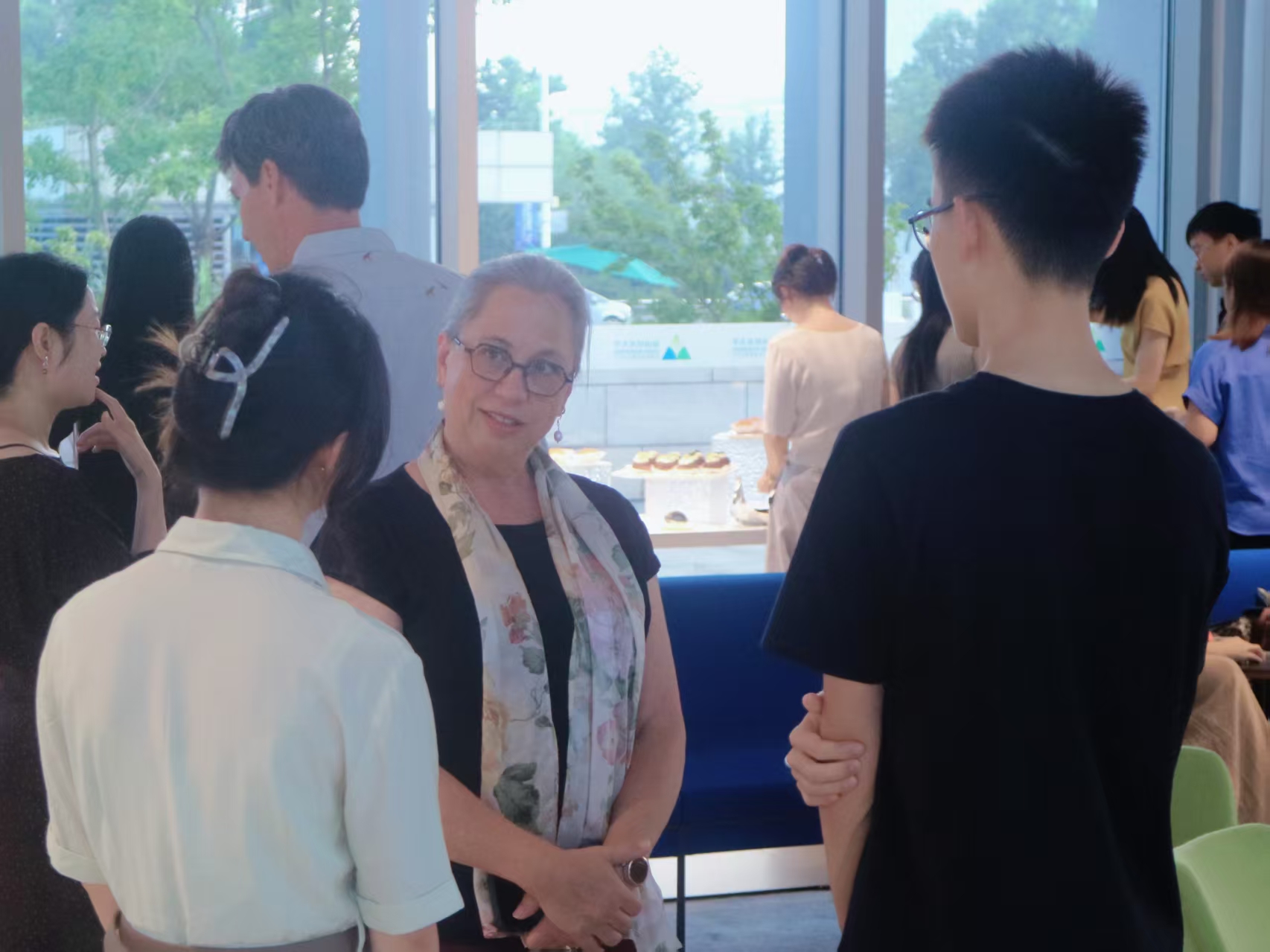
Lysa MacKeen talks with students.
Continuing the Conversation
From curriculum collaboration to interdisciplinary practice, and from educational design to student engagement, the visit gave both sides a more concrete understanding of how to coordinate resources and engage students in global health education.
In the future, the two sides will continue to stay connected and pursue further collaboration in curriculum development, programs, and student development. For students, this will mean more opportunities to engage with different courses, research teams, and real-world settings. These experiences will broaden their perspectives as they address real-world challenges and gradually develop their own understanding of global health.
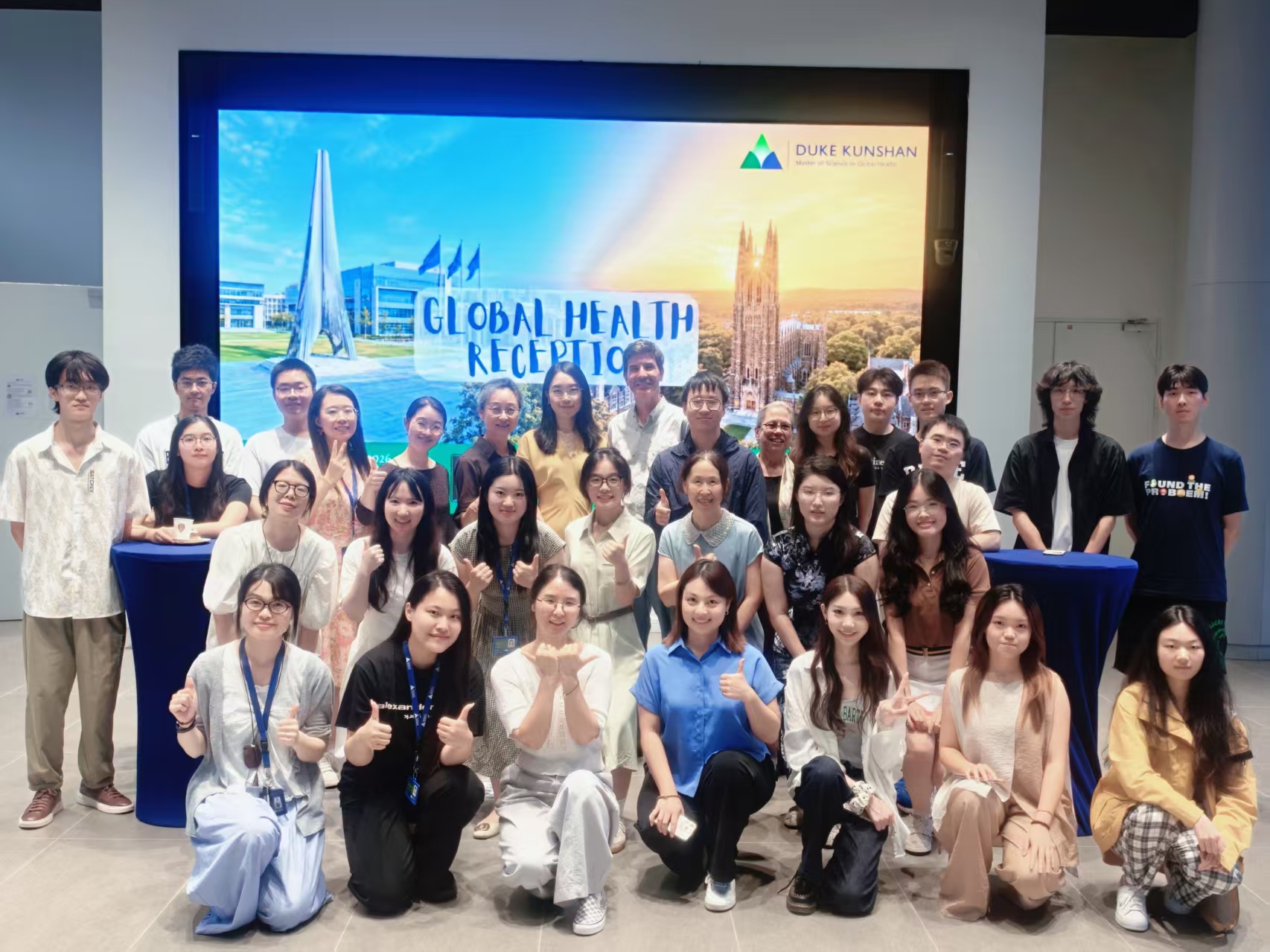
Group Photo of Exchange Meeting Participants
Translator | Wenxi Ge