

More than a hundred faculty, students, and health administrators packed the Academic Building at Duke Kunshan University on the evening of April 22, 2026, for a joint event of the “This is Global Health!” Symposium Series and the DKU Distinguished Speaker Series. Kunshan Vice Mayor Shan Jie was also in attendance. The evening featured a keynote by Dr. Jian Zhou, Academician of the Chinese Academy of Sciences and President of Zhongshan Hospital, Fudan University, who spoke on his journey “From a Lecture to a Lifelong Endeavor.” He was then joined by Prof. Fan Wu, Vice Dean of Shanghai Medical College, Fudan University, for a conversation on the deep integration of clinical medicine and public health.
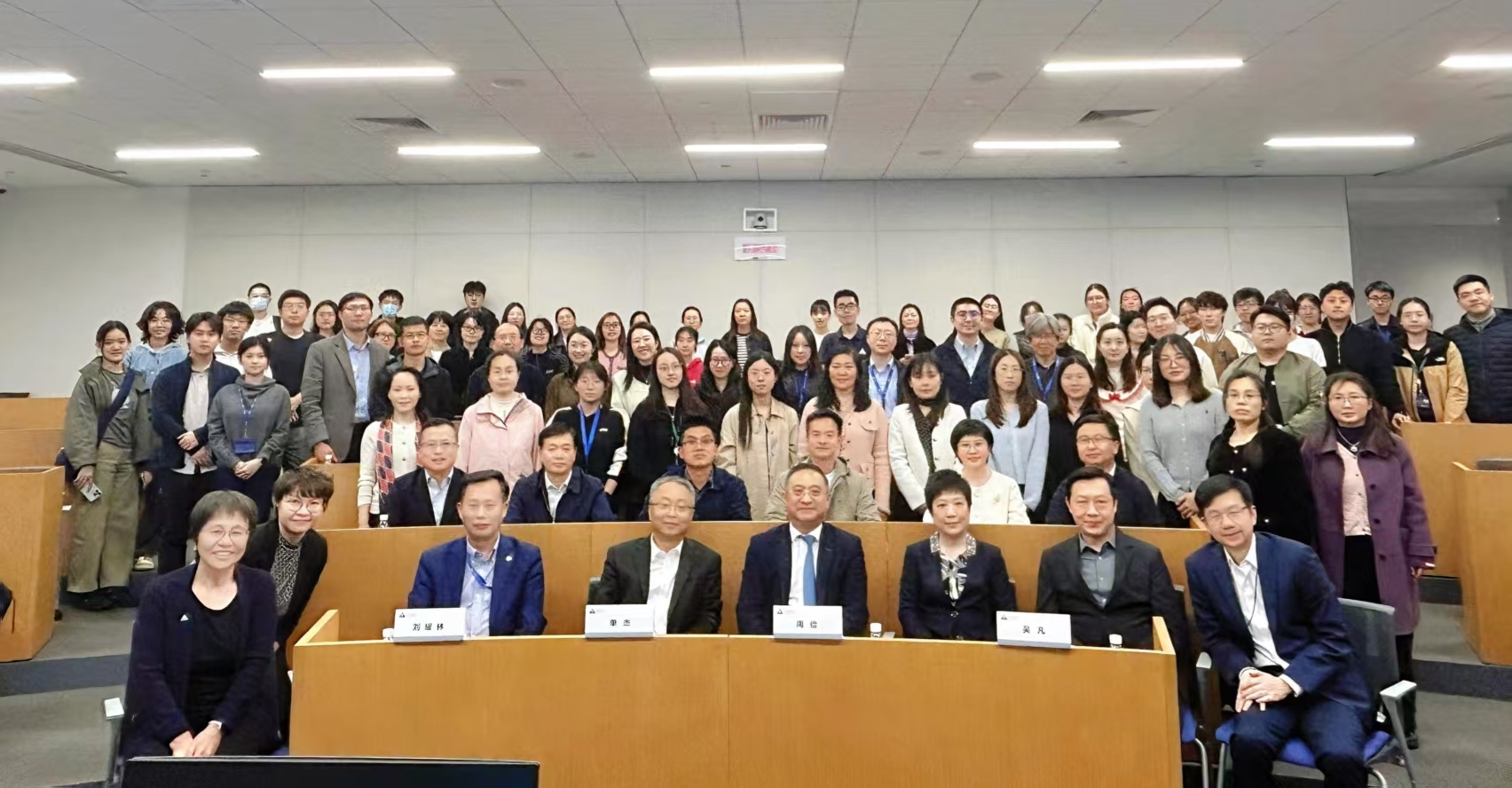
Group Photo
In his welcome remarks, Prof. Yaolin Liu, Chancellor of DKU, noted that a single lecture, a teacher, or a flash of inspiration can often change the course of a person’s life. That’s why DKU is committed to creating more platforms and opportunities for world-class scholars, physicians, and leaders to come to campus—to engage face-to-face, and to share their real stories of setbacks, perseverance, choices, and passion. “We truly believe that a lecture like this could be that ‘igniting moment’ in your life, helping you find what you love and why you do it,” Chancellor Liu said.
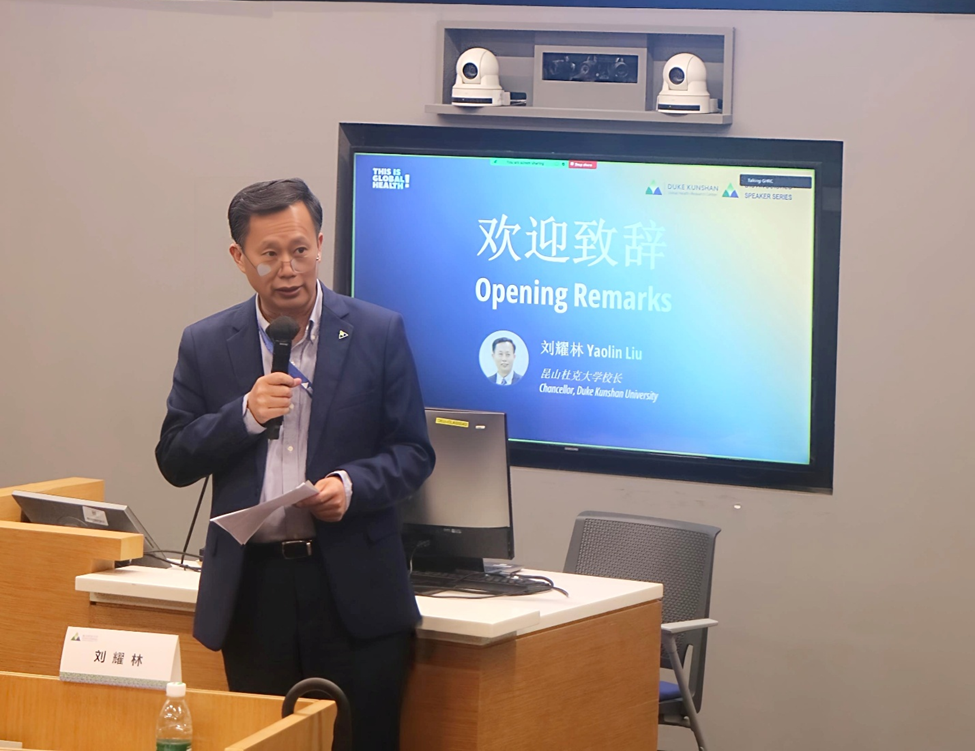
Chancellor Yaolin Liu delivers opening remarks
The fight against liver cancer: Once a follower, then a contender, now a leader in several fronts
In his keynote address, Academician Jian Zhou shared his 40-year career trajectory from student to top surgical expert. In 1987, when Prof. Zhaoyou Tang, then a mid-career scientist, was warmly received by Mr. Xiaoping Deng and later described that unforgettable scene to his students, a young Jian Zhou felt for the first time that a healer could not only treat diseases and save lives but also win honor for the country. That lecture 40 years ago became the starting point of his dedication to the field of liver cancer treatment.
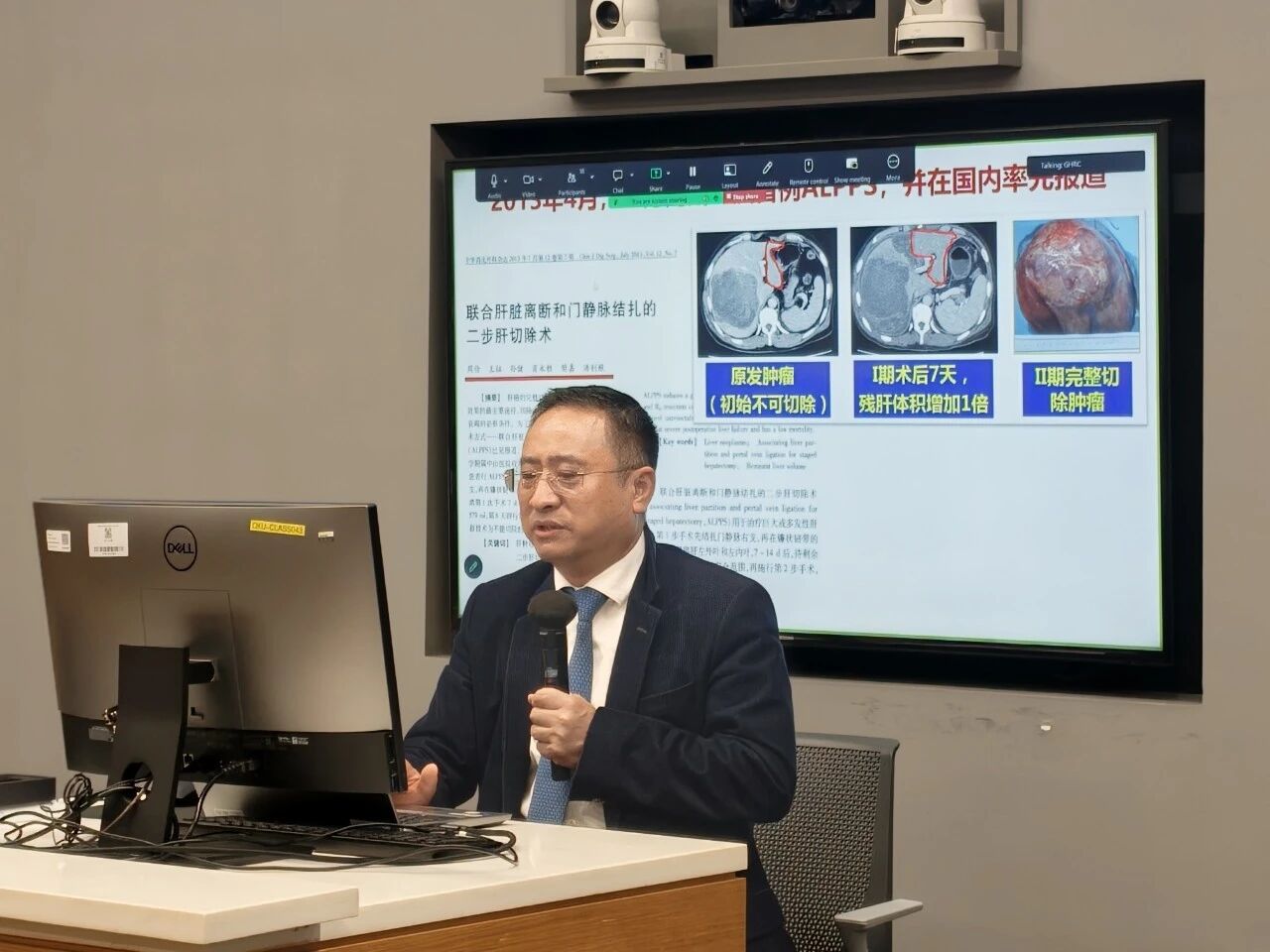
Academician Jian Zhou delivers the keynote speech
In the 1990s, facing a significant 14-year gap in liver transplantation capabilities between China and the United States at the time, Jian Zhou, then an Associate Director of his department, resolutely went abroad to study under Prof. Thomas E. Starzl, the “father of world liver transplantation.” In the operating rooms overseas, he started as the second assistant holding retractors, often standing for entire days. He recalled one multi-organ cluster transplantation surgery that lasted 16 hours, during which he had nothing to eat or drink. Walking out of the hospital under a starry sky, physically exhausted, he felt immense satisfaction: “I truly learned a great deal.”
After returning to China, Jian Zhou joined the liver cancer research team led by Academicians Zhaoyou Tang and Jia Fan. Together, they embedded “innovation” into their daily work and achieved a series of “zero to one” breakthroughs. These include early diagnosis using alpha-fetoprotein, as well as the development of a miRNA-based molecular diagnostic kit for liver cancer, which has served over five million people. On the surgical front, the team performed Asia’s first ALPPS (Associating Liver Partition and Portal vein ligation for Staged hepatectomy) procedure, went on to complete the world’s first dual-donor liver transplant (using both a living-related donor and a discarded liver), and in 2024, carried out the world’s first combined procedure integrating a discarded liver transplant with ALPPS.
Today, as a Co-Chair of the Lancet Commission on addressing the global hepatocellular carcinoma burden, Academician Jian Zhou collaborates with interdisciplinary experts from around the world to shape liver cancer prevention and control strategies—integrating China’s successful experiences into the global effort. He closed his keynote with a tribute to his mentor, Academician Zhaoyou Tang: “Only innovators advance; only innovators grow strong; only innovators prevail.” Zhou then encouraged all DKU faculty and students, as well as the young physicians from Kunshan’s health system in attendance, to boldly pursue excellence and embrace continuous innovation.
Mr. Jian Zhou, Director of the Kunshan Municipal Health Commission, representing Kunshan’s health system, highlighted at the event: “In the past, China’s liver cancer prevention and control faced challenges of high case numbers and limited international influence. Today, led by Academicians Zhou and Fan, and in collaboration with 51 global experts, published the ‘The Lancet Commission on addressing the global hepatocellular carcinoma burden comprehensive strategies from prevention to treatment,’ promoting a historic leap in China’s liver cancer efforts from follower to parallel runner, and to leader in several fronts. The original aspiration born from a single lecture and the decades of perseverance and climbing spirit are worth deep study and absorption by every colleague present.”
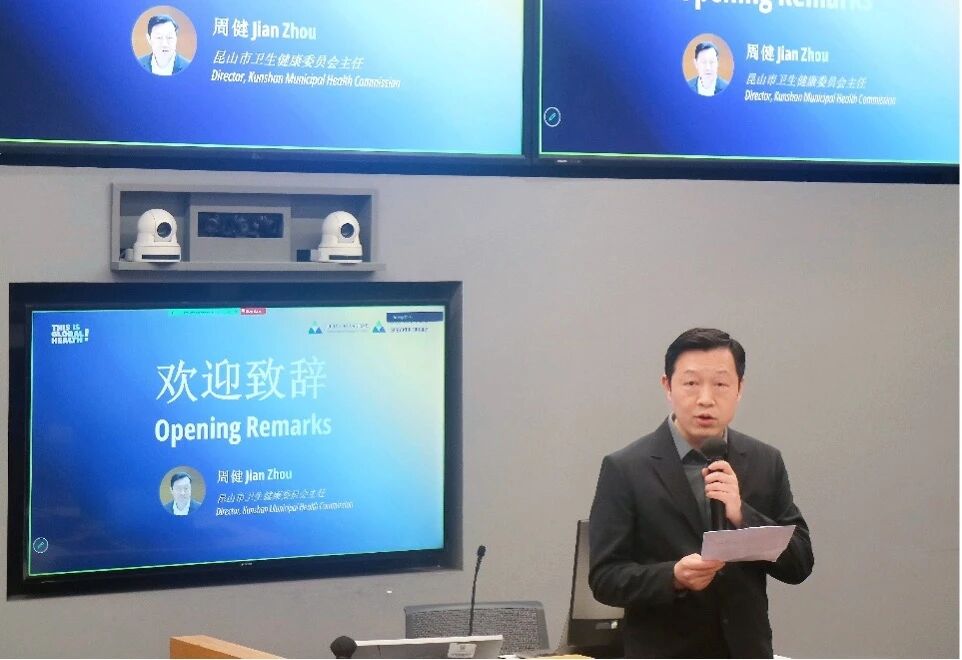
Director Jian Zhou makes remarks
During the lecture, Academician Jian Zhou also shared his history of reciprocal visits and exchanges with Duke University School of Medicine. From global experiences in cancer treatment and prevention to academic conferences in global health, Academician Zhou has established connections and collaborative relationships with several experts from Duke University School of Medicine.
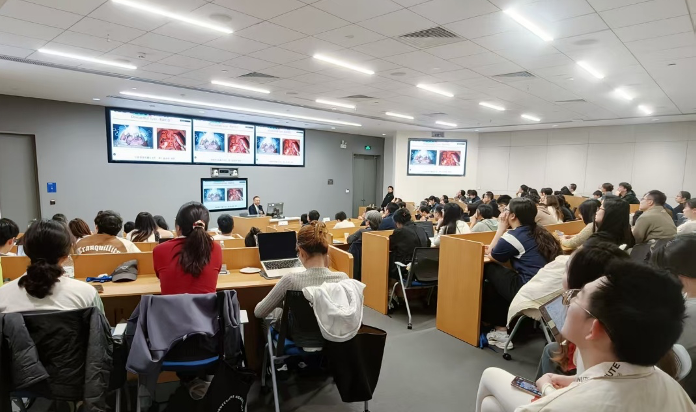
Full house at the event
Illuminating Millions of Lives: See the Patient, See the Population
Prof. Shenglan Tang, Co-Director of the DKU Global Health Research Center (GHRC), specially introduced the newly established research collaboration platform, the Innovation Lab for Cancer Prevention and Control (CALab). Jointly initiated by the DKU GHRC and institutions including Shanghai Medical College, Fudan University, with DKU hosting the secretariat, CALab focuses on key policy and systemic issues in cancer prevention and control. It aims to promote multidisciplinary collaboration, translate research findings, optimize public health policies, and achieve better population health outcomes.
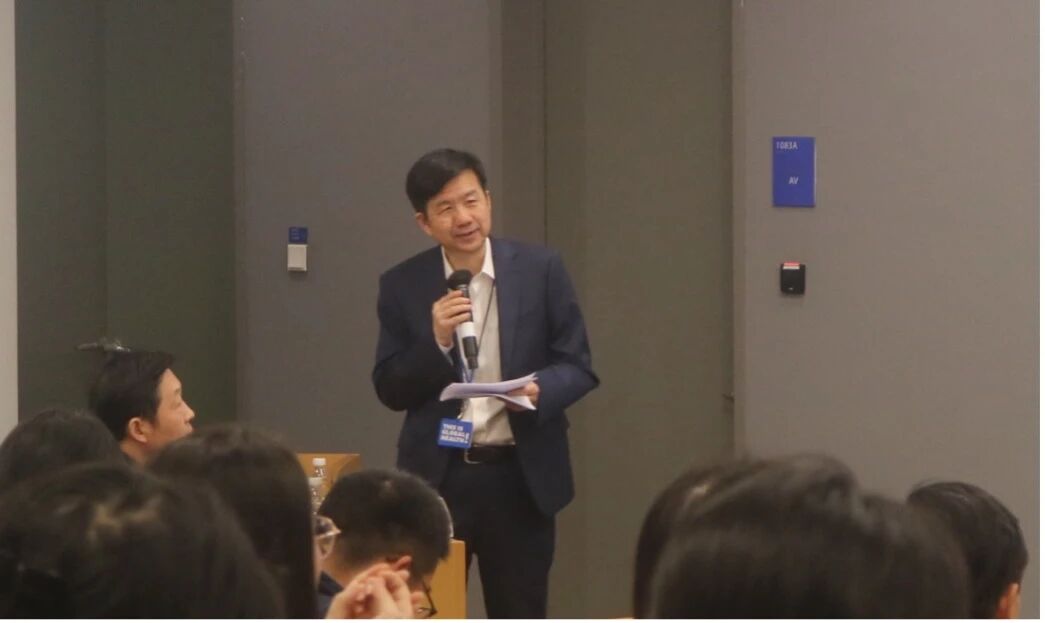
Prof. Shenglan Tang introduces CALab
The event then moved to a panel discussion, featuring a deep dialogue between clinical practice and public health – represented by Academician Jian Zhou and Professor Fan Wu. One is a leading liver cancer surgeon wielding the scalpel; the other, a public health expert with over thirty years of experience in disease prevention and control. Their intellectual exchange offered a vivid illustration of the symposium’s theme: “Illuminating Millions of Lives.” The discussion was moderated by Professor Fujie Xu, Co-Director of the DKU Global Health Program.
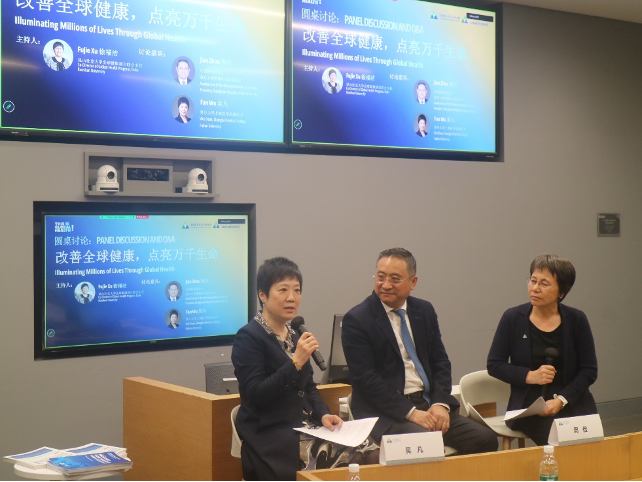
Panel discussion (from left: Prof. Fan Wu, Academician Jian Zhou, Prof. Fujie Xu)
Professor Fan Wu’s career in public health began in 1988, during a hepatitis A outbreak in Shanghai that infected more than 300,000 people. With hospital beds in short supply, Shanghai government temporarily requisitioned primary and secondary school buildings during the winter break. There were also not enough medical staff. At the time, Fan Wu was a junior-year college student, and she and her classmates rushed to the front lines. “We helped with the most basic clinical work—giving injections, drawing blood, starting IV drips. My venipuncture skills were honed during those days,” she recalled. That experience led her to a critical question: “Why did so many people fall ill in such a short time?” The answer she found, lay in healthy lifestyles, a clean environment, and safe food. This realization brought her to a fundamental principle: “Doctors treat illness after it happens, but prevention comes first. Relying on doctors alone is not enough. We must see not just the disease and the patient – we must see the population.”
Academician Jian Zhou expressed deep resonance with Professor Wu’s story. As the first Chinese scholar to lead a commission to develop a major global disease prevention and control report for The Lancet since the journal’s founding, he has gained a profound appreciation for the power of interdisciplinary collaboration—while also learning to integrate the distinct burdens and causes of liver cancer across different regions of the world. “We must learn from the experiences of Europe and America,” he said, “but also from good practices in developing countries—for example, Egypt’s negotiation with pharmaceutical companies for drug discounts.” He emphasized that preventing liver cancer requires the joint participation of policymakers, community health workers, and doctors. “The superior doctor treats disease before it arises. We doctors are truly limited in our impact. Several generations at the Liver Cancer Institute have worked for 50 years and treated tens of thousands of patients. But if prevention is done well, it can save millions.”
Professor Wu also described three unique “paradoxes” faced by public health professionals. First, eradicating a disease often means erasing the public health workers’ own professional future. Second, they strive for a world “free of incidents,” yet must constantly remind decision-makers of potential risks. Third, the most effective public health measures are often not sophisticated or expensive – they are simple and practical, the kind of thing even an elderly grandparent with no formal education can carry out. Citing Shanghai’s 2013 response to H7N9—hailed by the WHO as a model for managing emerging infectious diseases—she noted: “The measures themselves may be technically simple, but identifying and pinpointing the right measures requires a high level of technical expertise.”
Innovation Be the Gene of Healthcare, Health be Built into All Policies
Fielding questions from the audience, Academician Jian Zhou and Professor Wu wrapped up the dialogue with a few briefs but deeply insightful observations. When asked whether artificial intelligence will replace doctors, Academician Jian Zhou responded directly: “Some AI experts say doctors will be obsolete in ten or twenty years -some even say three—but that’s impossible. Doctors have their own confidence.” He went on to emphasize that innovation is the “gene” of healthcare that keeps one invincible, whether in clinical practice, public health, or any other field. “Innovation is what allows you to stand firm, no matter the moment.”
Professor Wu then added a macro-level perspective: clinical doctors should embrace the population-based thinking of public health. Beyond innovation, she noted, translating data into policy is equally crucial. Reiterating the philosophy of “prevention first,” she put forward a compelling proposition: “Health in All Policies”where “All Policies” means exactly that. Every public policy, not just health policy, should reflect health considerations. “Health should be reflected in every policy,” she said.
From “being inspired” to “inspiring others,” from clinical innovation to translating policy into practice—this dialogue was about more than medicine. It was about conviction and action. For DKU faculty and students, it offered a vivid lesson in growth and mission. For representatives from the Kunshan Municipal Health Commission and local medical institutions, it provided deep inspiration on how clinical practice and public health can work together. Here, where torch bearers meet those they seek to inspire, the future of global health grows clearer and more promising fueled by this continuous cycle of being inspired and inspiring others.
Photography by Xiaohang Lyu
Article by Yijie Nan
Layout by Yijie Nan